New
CODE:

Trekking is an exciting activity that lets you connect with nature while testing your physical limits. To make the most of this adventure, it’s essential to prepare your diet properly. Indeed, the food you take with you on your hike can make a big difference to your energy, morale and overall performance. In this advice page, we give you the secrets of a successful trekking diet.
Trekking is an exciting activity that lets you connect with nature while testing your physical limits. To make the most of this adventure, it’s essential to prepare your diet properly. Indeed, the food you take with you on your hike can make a big difference to your energy, morale and overall performance. Lepape gives you the best strategies for successful trekking nutrition.
Before embarking on meal planning, it’s important to understand the specific nutritional requirements of this intense activity. The body uses a lot of energy when walking for long hours over varied terrain.
During a trek, the metabolism works intensely, burning a large quantity of calories. Hikers need a diet rich in carbohydrates for quick energy, as well as proteins and fats for muscle recovery. Foods providing vitamins and minerals are also essential for maintaining good general health.
Hydration is an often overlooked but crucial aspect of trekking. It’s a good idea to drink regularly, even if you’re not thirsty. Take along water purification tablets or water filter bottles can be a practical solution for topping up your water bottle as you go along. Isotonic drinks can also help replace electrolytes lost through perspiration.
See our isotonic drinks
On long treks, weight is crucial: everything has to be optimized, including food and fuel for preparing meals.
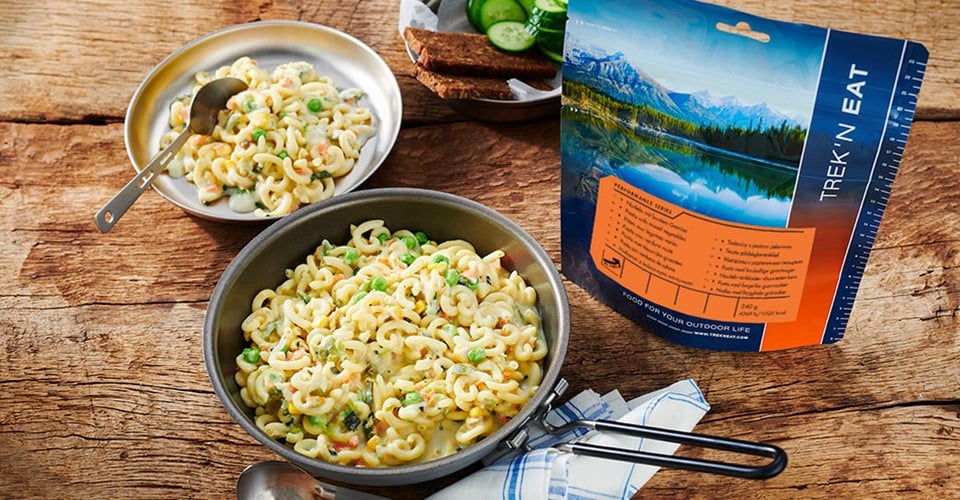
It’s best to choose foods with a high energy ratio, generally low in water, such as cereals and legumes, whether whole, in the form of flours or flakes. What’s more, these foods keep very well. There are many freeze-dried dishes available today, which are practical and provide the necessary energy. These are dehydrated ready meals, so all you have to do is add water and they’re ready to eat.
Good dietary planning starts well before the day of departure and continues during and after the trek. Each of these phases has specific needs.
A few days before you start trekking, opt for meals rich in complex carbohydrates such as pasta, rice and vegetables to build up your energy reserves. Avoid fatty or heavy foods that could cause digestive problems.
When walking for several hours a day, it’s important to eat frequent snacks to maintain energy levels. Here are a few examples:
For main meals, opt for easy-to-prepare dishes such as dehydrated soups, pre-cooked rice or freeze-dried meal packs. Make sure they contain a balance of carbohydrates, proteins and fats.
The recovery phase is just as important. When you get home, eat balanced meals, rich in protein to help your muscles recover, and legumes to replenish energy reserves. Remember also to keep well hydrated to compensate for losses incurred during the hike.
There are recovery drinks that can be very beneficial for recovery. You can also eat protein bars.
It’s hard to cook food on a hike without a stove, so this utensil is essential for trekking. During multi-day outings, hot meals are comforting and allow the body to warm up. There are different types of stoves, varying in terms of fuel, power, weight, size and sensitivity to wind.
For useful tips on cooking in a bivouac, read our advice page : Equipment for bivouac cooking
Don’t neglect food and nutrition when trekking, as they play a crucial role in physical and psychological performance.








Or
Or
Your data is processed and collected by Lepape, which acts as the data controller, in accordance with the French Data Protection Act and the RGPD. For more information on the processing of your personal data, you can consult our Privacy policy.