New
CODE:


Isotonic drinks or electrolyte drinks: These two options are often associated with hydration and sports nutrition, but they don’t exactly serve the same purpose. An isotonic drink generally provides water, carbohydrates, and electrolytes, while an electrolyte drink is primarily used to replenish mineral levels. Learn about the differences between these two options and how to choose based on the duration, intensity, and conditions of your workout.
The terms “isotonic drink” and “electrolytes” refer to two different things. An isotonic drink is a product formulated to provide both fluids and nutrients during exercise. Electrolytes, on the other hand, are minerals, including sodium, potassium, and magnesium, which play a role in various bodily functions.
An isotonic beverage generally contains electrolytes, but not all products that provide electrolytes are necessarily isotonic beverages.
To learn more about this topic, see our guide “Isotonic Drinks: What Are They For, and When Should You Drink Them?”
An isotonic drink typically combines water, carbohydrates, and electrolytes . Its composition is designed to support hydration while providing a source of energy during exercise.
It can therefore be particularly beneficial when your needs go beyond simply staying hydrated, especially during prolonged endurance activities such as running, trail running, cycling, or marathons.
The main benefit of an isotonic drink is that it combines several nutrients in a single solution. It allows you to hydrate while also consuming carbohydrates and minerals, which can simplify your nutrition strategy during long workouts.
However, it should not be considered essential for every session. For short workouts, water is usually sufficient, while fluid needs increase with the duration and conditions of the activity.
Sodium is one of the main electrolytes to consider during prolonged exercise. It is found primarily in sweat, and losses can be greater when sweating is profuse.
However, needs vary greatly from one athlete to another. The amount of sodium to consume must therefore be adjusted based on the duration of the activity, weather conditions, and sweat loss.
Electrolytes include several minerals, such as sodium, potassium, magnesium, and calcium. They play a key role in fluid balance and in the normal functioning of the muscles and nervous system.
In the field of sports nutrition, sodium is generally the electrolyte that receives the most attention during prolonged exercise and situations involving heavy sweating.
Sweating leads to a loss of water as well as various electrolytes. These losses can be greater during prolonged exercise, in hot weather, or when an athlete sweats heavily.
Electrolyte intake can then complement your hydration strategy. To learn more, check out our guide , “Electrolytes: What Are They For and When Should You Take Them?”
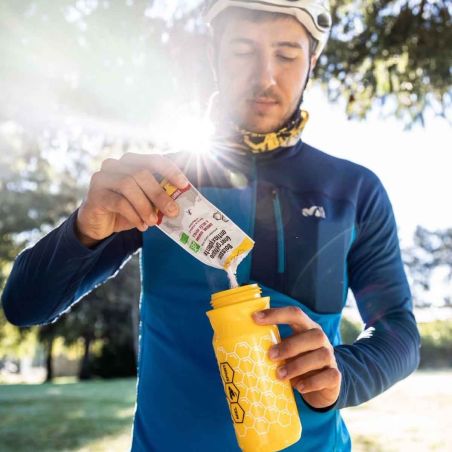
If the goal is to replenish both fluids and carbohydrates during prolonged exercise, an isotonic drink can be a practical solution. It helps distribute energy intake throughout the activity while keeping you hydrated.
In particular, it can supplement or replace some of the energy provided by gels or energy bars, depending on your chosen strategy.
If carbohydrates are already being supplied by other products or food, electrolyte supplementation can help target mineral intake more effectively. This solution can be beneficial for prolonged exertion during which losses due to perspiration are significant.
This makes it possible to separate carbohydrate intake from electrolyte intake and develop a more personalized strategy.
Your choice also depends on the duration of the activity, the temperature, the intensity, and how much you sweat.
Yes, but you need to consider the drink’s composition. An isotonic drink generally already contains electrolytes. Adding an additional product that provides the same minerals is therefore not always necessary.
Before combining multiple products, check their ingredients to estimate the total amounts of sodium and other electrolytes consumed during exercise.
The goal is to develop a strategy that aligns with your needs rather than simply increasing your intake. Ideally, this strategy should be tested during training, especially before a long competition.
The choice can be simplified based on your primary need:
So there is no one-size-fits-all solution. The most important thing is to adjust your intake based on the duration of the effort, the conditions, and your tolerance, and then to test your strategy before race day.
If you’re unsure whether to choose water or an isotonic drink during a competition, check out our guide , “Isotonic Drink or Water: What Should You Drink During a Race?“
Yes, an isotonic drink generally contains electrolytes, in addition to water and carbohydrates. Its exact composition, however, depends on the product.
Not necessarily. Electrolytes primarily provide minerals, while an isotonic drink generally combines hydration, carbohydrates, and electrolytes. The choice therefore depends on the nutrients you need during exercise.
During a marathon, fluid loss through sweating can be significant, especially in hot weather. In such cases, consuming electrolytes can be part of your hydration strategy, depending on the duration of the race and how much you sweat.
Yes. Electrolytes and carbohydrates serve different purposes. It’s possible to consume minerals separately when carbohydrates are already being provided by gels, bars, drinks, or other foods.
Heat can increase fluid loss through sweating. The choice therefore depends on the duration of your activity, how much you sweat, and your other planned fluid intake. A drink that provides fluids, carbohydrates, and electrolytes can be helpful during prolonged exercise.
To round out your hydration and sports nutrition strategy, check out our tips on trail running nutrition: before, during, and after the race.








Or
Or
Your data is processed and collected by Lepape, which acts as the data controller, in accordance with the French Data Protection Act and the RGPD. For more information on the processing of your personal data, you can consult our Privacy policy.