New
CODE:

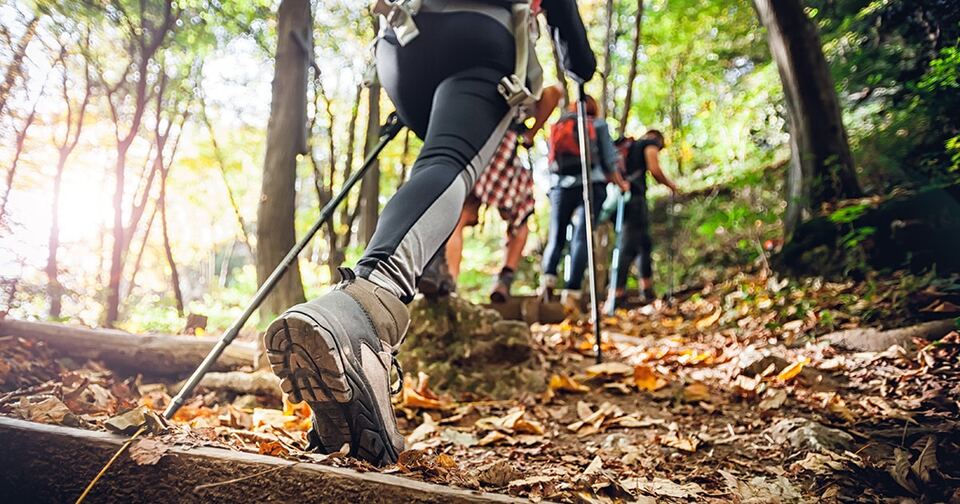
Walking with hiking poles is not easy for many hikers. Yet the advantages of these accessories are undeniable. While poles are of limited use for short day hikes, they become indispensable for longer hikes, if the slope is steeper and the terrain more rugged. We’ll explain.
Walking with poles has many advantages, both in terms of walking comfort and joint benefits.
Knees, ankles, hips and spine are under constant strain when hiking. In addition to carrying your own weight, you often carry a backpack, which adds a significant overload. Using hiking poles reduces the weight on your joints. The longer you walk and the greater the distance, the more beneficial walking poles become. This energy-saving effect on the joints helps to preserve them and prevent injury. Protecting your joints on every outing is crucial if you are to continue hiking for many years to come.
Falls and slips are often caused by fatigue or slippery, unstable terrain. When hiking, whatever your level, you will inevitably encounter surfaces such as ice, snow, mud, sand, scree and other wet areas. Gravity means that four points of support are much more stable and effective than two. Walking poles improve your balance on descents, providing confidence and protection. On difficult terrain and with a heavy pack, walking poles become indispensable, offering control, mastery and precision.
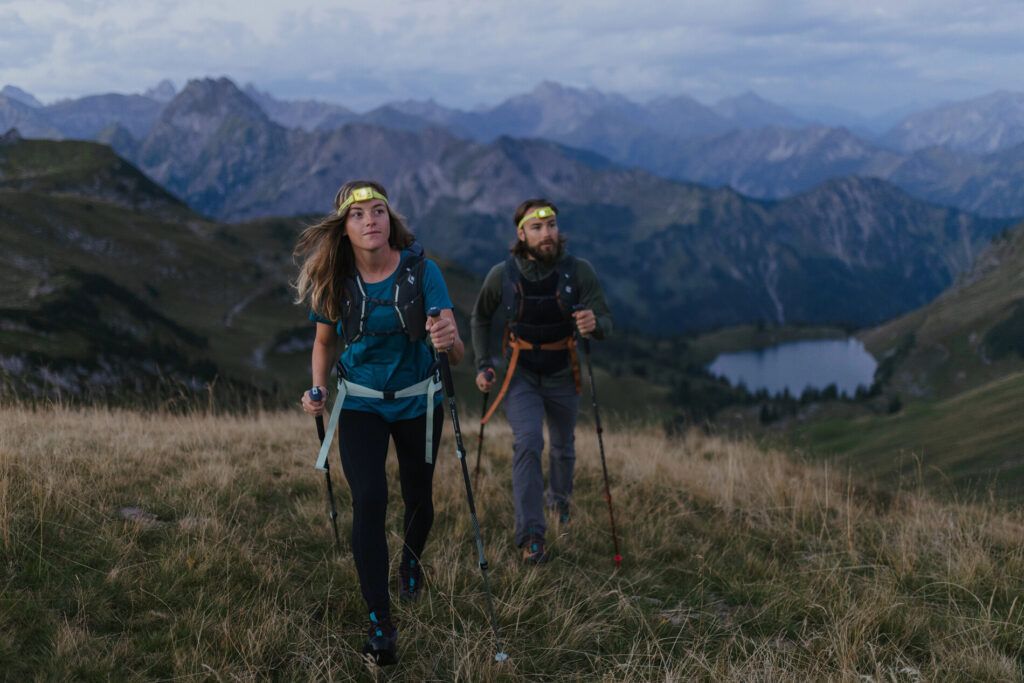
When you walk with poles, you work your upper muscles, taking the strain off your leg muscles. At the end of the day, your legs will feel less heavy. You’ll notice a clear difference when climbing, with or without poles. When the difference in altitude becomes significant, it is essential to take your poles with you.
Walking poles make your walk more regular and more efficient. This regular cadence also helps regulate your breathing. As a result, you’re faster and less tired than with traditional walking. Involving the upper body offers greater stability, and allows you to increase your speed, especially on steep descents. What’s more, walking poles keep your elbows at a 90-degree angle, improving your posture . This reduces joint and muscle tension.
What’s more, when you use walking poles, the movement of your hands improves blood circulation and your fingers don’t swell!
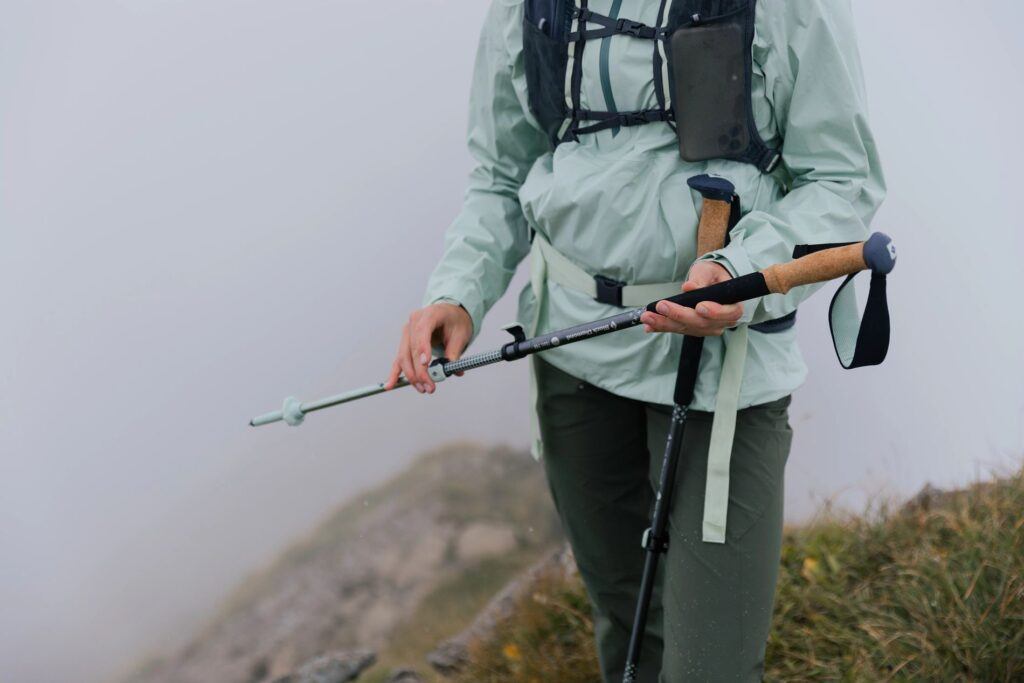
The walking stick is an extension of your arm. It is used to assess the stability of the terrain, the depth of the snow, the strength of the ice or the thickness of the mud. Walking poles help you to know exactly where to put your feet.
Walking poles also help you to push back or overcome obstacles in your path.

The choice of walking poles is an important one, and requires consideration of two factors: the different types of poles and their size.
Most walking poles are telescopic or have adjustable sizes so you can store them more easily in your backpack. Size adjusts with a screw or clip system. They feature cork, foam or plastic handles and a wrist strap. Steel or tungsten carbide tips.
Nos modèles de bâtons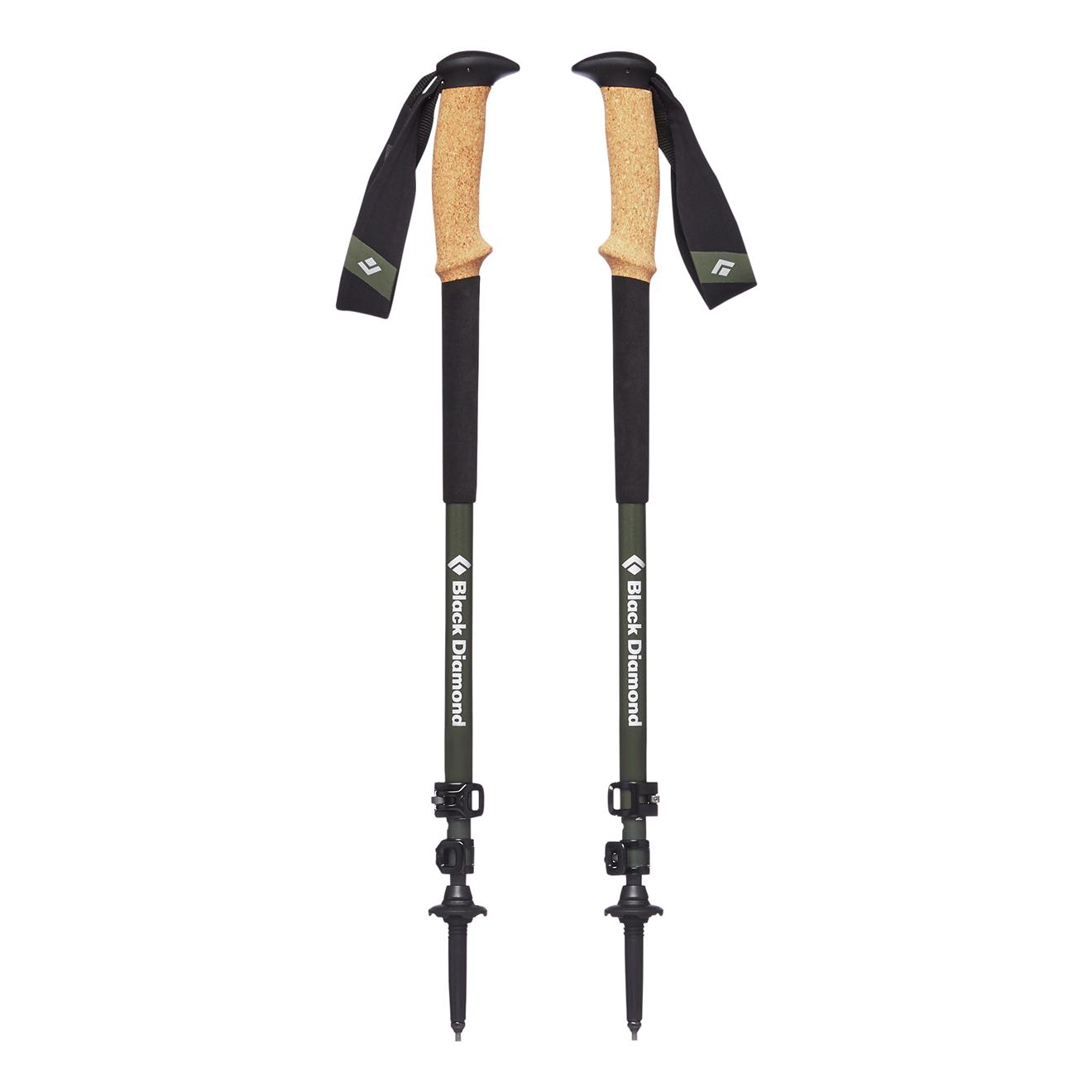
There are aluminium walking poles and carbon walking poles. Aluminum is strong and durable. Ideal for beginners. The more fragile carbon poles are lightweight and have excellent shock absorption. They are recommended for experienced hikers.
Découvrez nos modèles en aluminiumChoosing the right size for your walking poles is essential for optimum comfort. A pole that’s too big will make you lift your shoulders too much, while one that’s too short will make you arch your back while walking.
To determine the right size for you, measure the distance between the floor and your elbow. Your elbow should always be at right angles to the handle.
Telescopic poles are therefore very practical for ascending and descending!
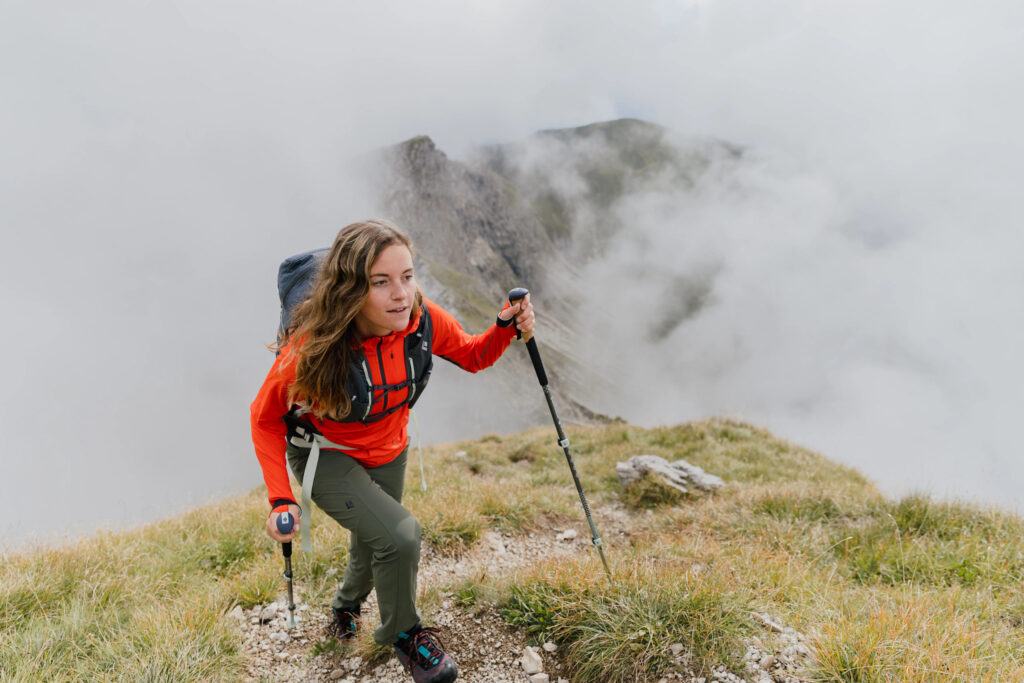
Walking poles aren’t just another accessory. They are indispensable for most activities, and are an essential part of the equipment you need!
See also: How to choose hiking boots








Or
Or
Your data is processed and collected by Lepape, which acts as the data controller, in accordance with the French Data Protection Act and the RGPD. For more information on the processing of your personal data, you can consult our Privacy policy.