New
CODE:

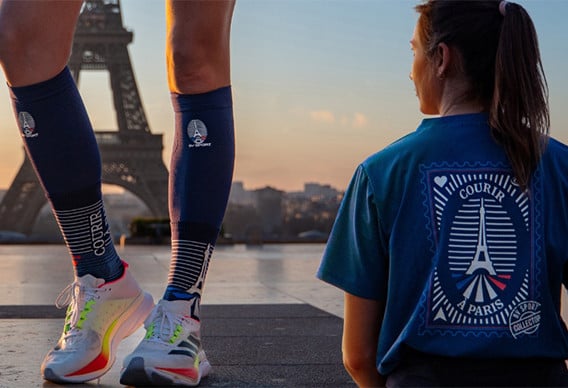
The running socks are often underestimated, yet they play an essential role in a runner’s comfort and performance. Anti-blister, breathable, reinforced or compressive, they can transform the way you feel from the very first kilometers.
Poorly chosen, they can actually cause overheating, discomfort and injury. Properly chosen, they improve foot stability, moisture management and the overall quality of your run.
In this guide, we help you understand the different types of running socks and choose the right ones for your running needs.
Unlike conventional socks running socks are designed to meet specific requirements:
A good pair of shoes acts as a technical interface between your foot and your shoe.
Designed for performance and long distances.
Perfect for half-marathons and marathons.
The compression socks are designed to improve venous return and limit muscle fatigue.
Recommended for long distances or recovery phases.
The difference isn’t limited to design:
For example, women’s models are often more fitted in the midfoot.
The compression models are recommended for :
Please note: they are not a substitute for a good running shoe but complement it.
Yes, they greatly reduce friction and improve comfort over time.
It’s possible, but not recommended for long distances.
For long outings, competitions or recovery.
Choose snug-fitting, breathable technical socks.
On average 6 to 12 months, depending on intensity of use.
The running socks are technical equipment in their own right. Properly chosen, they improve comfort, limit injury and optimize performance.
Whether you’re a beginner or an experienced runner, the right model can really change your running experience.







Or
Or
Your data is processed and collected by Lepape, which acts as the data controller, in accordance with the French Data Protection Act and the RGPD. For more information on the processing of your personal data, you can consult our Privacy policy.