New
CODE:

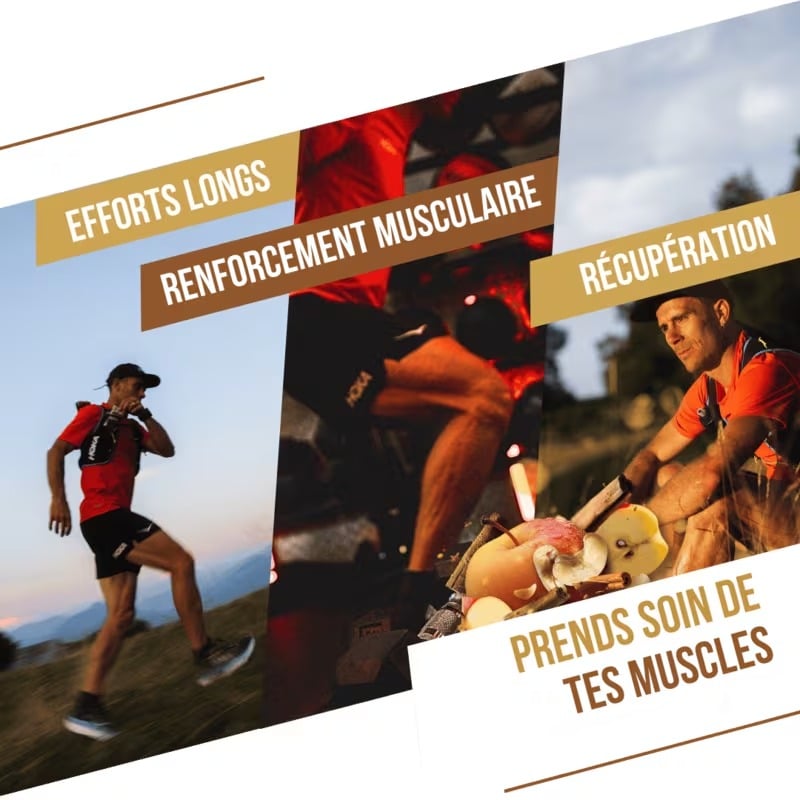
Convenient to carry and easy to eat, protein bars have become a staple of sports nutrition. But what are they actually for? When should you eat a protein bar—before or after exercise? And how do you choose a product that suits your needs? Check out our tips for choosing the right protein bars and incorporating them into your diet.
A protein bar is a snack designed to provide a significant amount of protein in a convenient format. It can be a good option for athletes who want to supplement their diet, especially when meals are infrequent or a protein source isn’t readily available.
Proteins play a key role in maintaining and building muscle mass. Their importance is particularly significant when engaging in regular physical activity or when nutritional needs are higher.
However, a protein bar is not an essential food for all athletes. A varied and balanced diet can perfectly meet protein needs without resorting to specific products. The bar is primarily a convenient option.
To complement your diet around sports practice, also discover our selection of sports nutrition .
You can eat a protein bar before a workout when you need a snack and it’s been a while since your last meal. Your choice depends largely on the bar’s ingredients and how well your digestive system tolerates it.
However, for endurance exercise, a bar that is very high in protein does not serve the same purpose as one composed mainly of carbohydrates. Before a workout or competition, carbohydrate intake can be particularly important for providing a readily available source of energy.
After training, a protein bar can be a practical solution when a meal isn’t planned immediately. It provides protein as part of a recovery diet.
It can be particularly beneficial after a strength-training session or a sport that places heavy demands on the muscles. After a long or intense endurance workout, it can also be combined with a source of carbohydrates and adequate hydration.
Check out our tips on nutrition for trail running before, during, and after the race.
A protein bar can also be eaten simply as a snack, especially when you’re short on time or on the go. It’s a convenient alternative to other snacks, provided it’s part of an overall balanced diet.
Protein content is the first thing to look for. Compare the nutritional information listed on the packaging and check the amount of protein per bar, rather than relying solely on the label “protein bar.”
Protein bars can contain various sources of protein, including milk or whey protein, as well as plant-based proteins such as pea or soy protein.
Your choice may depend on your dietary preferences, your diet, and your digestive tolerance. Plant-based proteins, in particular, can be an alternative for people who want to limit or avoid animal-based proteins.
A protein bar isn’t just about its protein content. Depending on how you intend to use it, it may also be important to consider its carbohydrate and fat content.
When it comes to nutrition around an endurance workout, a bar with more carbohydrates may meet a different need than a bar intended primarily to supplement daily protein intake.
The list of ingredients also allows you to compare products. Pay particular attention to the presence of fiber, sweeteners, sugars, or other ingredients that may affect digestion.
Digestive tolerance is particularly important when the bar is consumed just before or during physical activity. As with any sports nutrition product, it’s best to try a new product during training rather than on the day of a competition.
Check out our selection of protein bars to find a product that suits your needs.
Protein bars and energy bars serve different purposes, although some products may have an intermediate composition.
The choice therefore depends primarily on when you eat it and your specific goal. For endurance sports, check out our guide Energy Gels: When to Take Them and How to Choose Them?.
Also check out our selection of energy bars for running and trail running.
You can eat a protein bar before or after exercise, or simply as a snack between meals. The best time depends on your diet, your physical activity, and your individual needs.
It can be a good snack before a workout if it’s been a while since your last meal. For endurance sports, also check the product’s carbohydrate content to choose a bar that suits your goals.
Yes. A protein bar can be a convenient option after a workout, especially when your next meal is still a while away. It can be paired with carbohydrates depending on the type and duration of your workout.
There is no single amount that works for everyone. Compare the protein content per bar and choose the product based on your nutritional needs and how this snack fits into your daily diet.
A protein bar is, above all, a convenient snack. It does not necessarily replace a full meal, which also provides carbohydrates, fats, fiber, vitamins, and minerals.
A protein bar is primarily a source of protein, while an energy bar is generally higher in carbohydrates and designed to provide energy. How you use them therefore depends on the time of day and your specific goal.








Or
Or
Your data is processed and collected by Lepape, which acts as the data controller, in accordance with the French Data Protection Act and the RGPD. For more information on the processing of your personal data, you can consult our Privacy policy.