New
CODE:

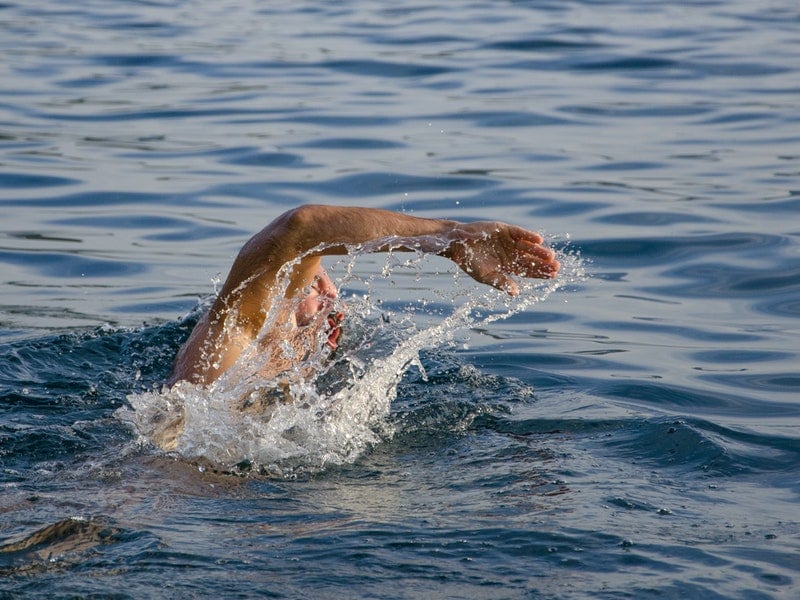
Open water swimming is often feared by beginner triathletes. With no swim lines, changing visual cues and high participant density, this discipline requires specific technical adaptations. Here’s how to improve your efficiency and confidence for triathlon swimming.
Unlike a swimming pool,open water presents variable elements: temperature, current, visibility and swimmer density. Lepape offers advice on how to cope.
Alternate your pool sessions with sessions on the water, without a swim line, to learn to swim straight without a reference wall.
Starts are often hectic. Get used to swimming in groups, taking a few touches and staying focused on your trajectory.
Wind, waves or cold water can be disruptive. Test different equipment (goggles, neoprene suit) and training conditions to adapt.

Good technique allows you to swim further with less effort – essential if you want to tackle the bike in top form.
Work on the horizontal position: head down, sheathing, regular flapping. Good alignment reduces drag.
Learn to breathe on both sides and maintain a constant rhythm. This allows you to adapt to the sun, the waves or your competitors.
In open water, a slightly faster frequency improves stability and steering, especially in rough seas.
In the absence of lines, it’s crucial to orient yourself regularly without disrupting your stroke.
Learn to look up every 6 to 10 strokes to spot the buoys. Practice this while maintaining your swimming rhythm.
Identify stable visual landmarks (trees, buildings) to guide you, in addition to buoys which are sometimes difficult to see.
Some models of watches can analyze your trajectory and correct deviations during training.
A triathlon-specific neoprene wetsuitwith soft shoulders and a snug fit, for better buoyancy and freedom of movement.
Warm up in the water before you start. Stand slightly back if you’re anxious, and concentrate on your breathing.
No. Alternate training in the pool to work on technique, and in open water to develop your bearings and ease of movement.
Work on technique before speed. A few sessions with a coach or a club can quickly make you more efficient.
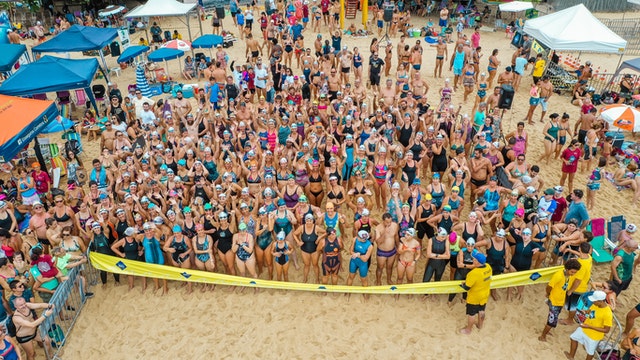
Swimming in a triathlon can’t be improvised. Good technique, orientation and familiarity with open water are the keys to a successful start.








Or
Or
Your data is processed and collected by Lepape, which acts as the data controller, in accordance with the French Data Protection Act and the RGPD. For more information on the processing of your personal data, you can consult our Privacy policy.