New
CODE:

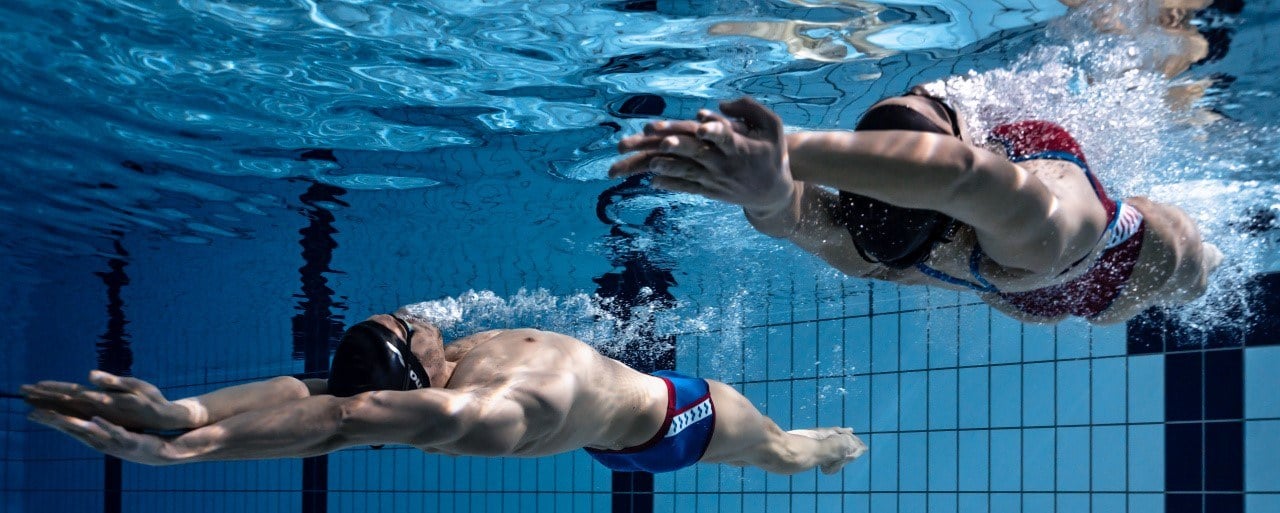
You’re looking for high-performance, durable swimming equipment. Equipment that will accompany you season after season, in training as well as in competition.
Whether you swim for pleasure, are an experienced swimmer or a triathlete in preparation, sooner or later you’ll need equipment to progress.
Here’s an overview of equipment to consider
The goggles are indispensable. They offer three key advantages:
Streamlined goggles: lightweight, hydrodynamic and snug-fitting. Ideal for pool and triathlon, often with mirrored lenses.
Swimming masks: wide field of vision and great comfort. Perfect for open water or leisure swimming.
Swedish goggles: minimalist, with a precise fit. Highly appreciated in competition.
The swim cap is a must-have for all swimmers. They are often compulsory in public swimming pools and offer a number of advantages:
Choose a cap that suits your size and hair type. A good fit guarantees comfort and efficiency.
The pull-buoy is a float placed between the thighs. It’s one of the most basic but effective technical tools for training.
The pull-buoy is an invaluable ally for progress. It strengthens the upper body, improves technique and allows you to vary your sessions.
The swim board, held in front of you, is the perfect complement to the pull-buoy. It specifically targets leg work.
The board is an essential tool for strengthening the legs, improving endurance and optimizing your swimming technique.
Swim plates are reserved for more advanced training. Handle with care to avoid injury or disturbing other swimmers. Some pools even reserve specific lanes for them.
Plates strengthen your muscles, increase your speed and improve your technique. They also provide an excellent cardiovascular workout. The size of the surface is an essential consideration, depending on your objectives and level.
Remember: finger paddles are ideal for technique, hand paddles for power. Choose according to your needs: technical progress or muscular strengthening.
Fins are the perfect complement to fins. They require the same precautions in use: watch out for other swimmers and respect reserved lanes. The choice of length and surface depends on your level of training.
Fins provide the same benefits as plates, but for the lower body. They strengthen, speed up and refine your leg technique.
Fins are an excellent tool for progress. Power, endurance and swimming efficiency: they are suitable for all levels.
The front snorkel isolates breathing from swimming movements. It paves the way for more targeted and effective technical sessions.
There are two types of snorkel, depending on your level:
The front snorkel is an invaluable tool. It improves technique, stabilizes posture and makes swimming more fluid and controlled.
The nose clip are essential accessories for swimmers. They are designed to prevent water from entering the nostrils while swimming. This allows swimmers to breathe more easily while maintaining a hydrodynamic position in the water.
Nose clips are usually made of silicone or soft plastic for a comfortable fit.
String bags are small, lightweight fabric bags with drawstrings.
Swimmers use them to carry their essentials such as goggles, swim caps, boards/pull-buoy, fins/floats, etc.
They have the invaluable advantage of being made of mesh, so they don’t retain water and allow you to collect your accessories when you get out of the water, without preventing them from drying.
Storage bags are larger than string bags and are designed to carry all the equipment needed for swimming training.
Some storage bags also feature special compartments to keep items organized, and especially “wet” compartments for storing swimsuits and towels on the way home.
Swimming towels are specially designed for swimmers. They are generally larger than ordinary towels and are made of absorbent materials that dry quickly.
Microfiber towels are ideal for swimmers because they dry quickly, are lightweight and compact, durable, versatile, and offer improved hygiene thanks to their natural antibacterial properties.
Last but not least on this list : the watch. Already a must-have for running and cycling, it has become an essential tool for swimmers wishing to track and optimize their training.
The latest generation of multisport watches offer complete tracking, both in the pool and in open water. Using accelerometers or GPS, they analyze your performance and can even manage triathlon transitions.
The watch is your ally for structured, measured and increasingly effective sessions.








Or
Or
Your data is processed and collected by Lepape, which acts as the data controller, in accordance with the French Data Protection Act and the RGPD. For more information on the processing of your personal data, you can consult our Privacy policy.