New
CODE:

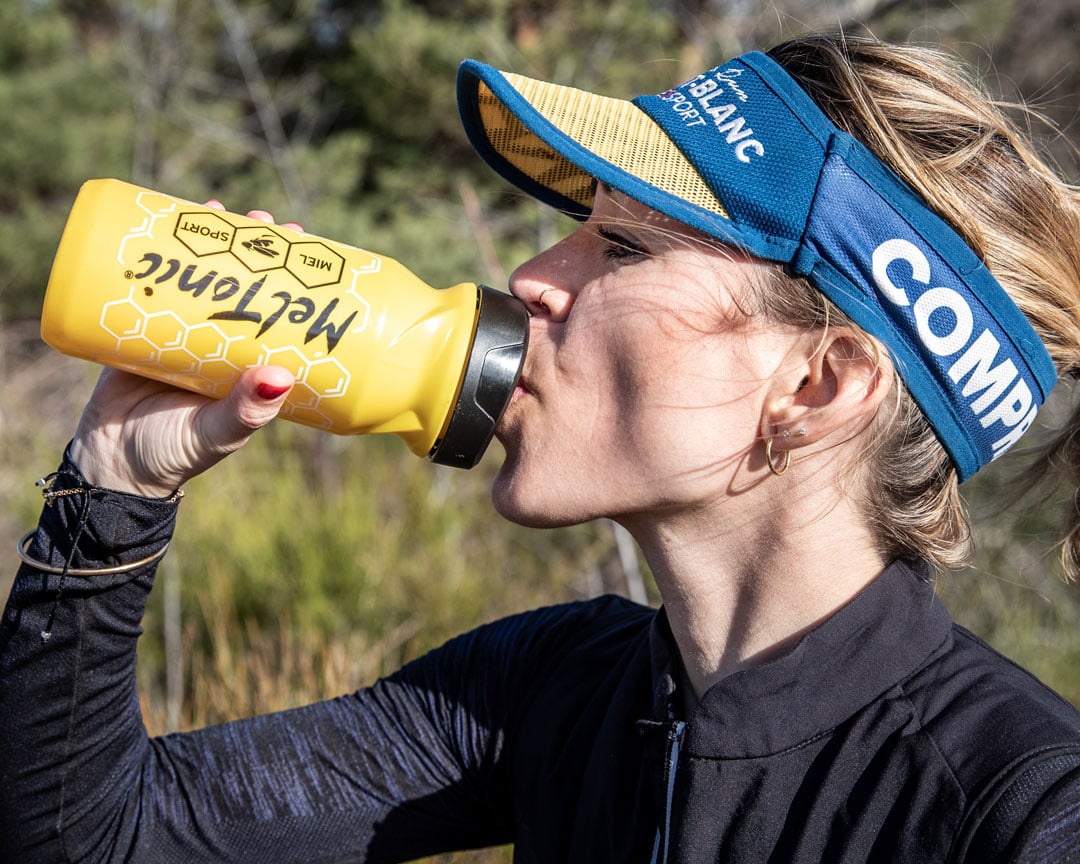
Isotonic drinks are designed to support hydration and energy intake during exercise. Whether you’re running, trail running, running a marathon, cycling, or competing in a triathlon: learn what an isotonic drink is for, when to drink it, and how to choose a formula that’s right for your activity.
An isotonic drink is a sports drink formulated to provide both water and—depending on the product— carbohydrates and electrolytes. It is designed to meet an athlete’s needs during physical activity, especially during prolonged exercise.
Its composition is designed to facilitate the absorption of the beverage during exercise. However, the formulas vary greatly from one product to another: some are primarily focused on hydration and mineral intake, while others also provide a significant amount of carbohydrates.
It is therefore important to check the ingredients and nutritional information on the product to find out what it actually provides.
The primary function of an isotonic drink is to contribute to hydration during exercise . Drinking regularly helps to compensate for some of the fluid losses, particularly those related to perspiration.
Needs vary depending on the duration and intensity of the activity, temperature, humidity, the level of perspiration, and the individual characteristics of each athlete.
Some isotonic beverages contain carbohydrates. They can therefore contribute to energy intake during prolonged exercise, either as a supplement to or a substitute for other sources of carbohydrates, depending on the chosen nutritional strategy.
A carbohydrate-rich beverage can be particularly useful when you want to combine hydration and energy in a single product.
Isotonic beverages can also contain electrolytes, particularly sodium. These minerals play a role in various bodily functions and are especially affected by losses due to sweating.
The amount of electrolytes varies by product. It is therefore helpful to compare nutrition labels, especially for long workouts or those done in hot conditions.
An isotonic drink can be consumed before a workout or competition, particularly to ensure you start the activity properly hydrated. However, it is not essential before all activities: your needs depend largely on the expected duration and the conditions under which the activity will take place.
Isotonic drinks are most beneficial during prolonged exertion. They combine hydration with the potential intake of carbohydrates and electrolytes.
Whether it’s a marathon, a long-distance trail run, a bike ride, or a triathlon, they can be incorporated into an overall strategy that combines drinks, gels, bars, and other energy sources.
To round out your nutrition strategy, check out our guide Energy Gels: When to Take Them and How to Choose Them?.
After physical activity, hydration remains important. An isotonic drink can help provide water and minerals, but it should not be confused with a recovery drink , whose composition is specifically designed to support the recovery phase.
The choice of beverage therefore depends on when it is consumed and the desired outcome.
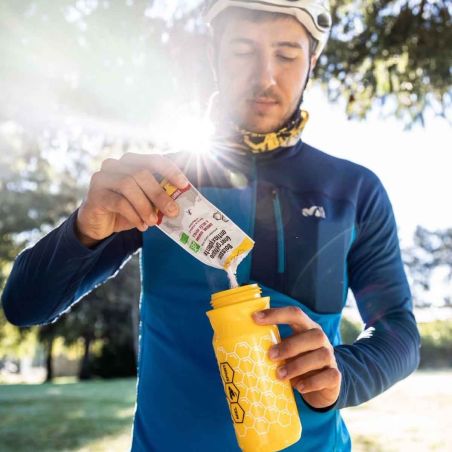
If your goal is also to get energy during exercise, check the carbohydrate content per serving and per volume of prepared drink.
This information helps you determine what role the beverage can play in your carbohydrate intake strategy and avoid unnecessarily increasing the number of energy sources.
Sodium, in particular, is an electrolyte to keep in mind during prolonged physical activity. Some beverages also provide potassium, magnesium, or other minerals.
However, there is no single ideal mix for all situations. Your choice should take into account the duration of the activity, weather conditions, and your individual needs.
The taste and concentration of the drink are also important. A drink that’s too sweet or too concentrated may be less pleasant to consume over a long period of time.
Before a competition, try your drink during practice to see how your body reacts to it and how it tastes when you consume it regularly.
The isotonic drinks come in various formats. Powder that you mix yourself generally makes it easy to adjust the amount you prepare and to carry several servings with you. Ready-to-drink formats, on the other hand, are convenient when you’re looking for something you can drink right away.
These terms can sometimes be confusing. They do not necessarily refer to the same products.
The term used on the packaging is therefore not enough to determine a beverage’s characteristics. Always check its ingredients and nutritional information.
For short, low-intensity activities, water is perfectly sufficient for hydration. When the effort is prolonged, needs may differ, and a drink that provides carbohydrates and electrolytes can be a valuable part of an athlete’s strategy.
The choice depends, among other things, on the duration of the run, its intensity, the temperature, and the amount of sweating. Therefore, it is not necessary to always replace water with an isotonic drink.
For long workouts, the drink can also be combined with solid foods or gels. Check out our guide Energy Bars: When to Eat Them and How to Choose Them? to better plan your nutrition during exercise.
It’s generally better to drink small amounts regularly rather than wait until you’re very thirsty to drink a large amount all at once.
However, the amount you drink should be tailored to each situation. In particular, your hydration strategy can be adjusted based on the race’s duration, the weather, and how much you sweat.
For outings where you need to carry your own drink, choosing the right gear is also important. Check out our guide Choosing a Hydration Vest or Pack to find a solution that suits your needs.
During periods of extreme heat, fluid and mineral loss can be more significant. You can also find our tips in our guide, “Running in Extreme Heat.”
An isotonic drink can be part of a broader nutritional strategy during endurance activities. Depending on the duration of the activity, it can be combined with energy gels, energy bars, or other foods.
The goal is to spread out your intake throughout the activity and avoid relying on a single energy source. As with other sports nutrition products, test your strategy during training before using it in competition.
For long-duration activities, also check out our guide Trail Running Nutrition: Before, During, and After the Race.
An isotonic drink is designed to support hydration during exercise. Depending on its composition, it can also provide carbohydrates and electrolytes.
It can be consumed before, during, or after exercise, depending on its composition and the desired goal. During prolonged exercise, it can help combine hydration with the intake of carbohydrates or electrolytes.
An isotonic drink is formulated to support hydration and may also provide carbohydrates and electrolytes. An energy drink generally places more emphasis on carbohydrate intake. The exact composition should be checked on each product.
Water may be sufficient for many short workouts. For longer activities, a drink that provides carbohydrates and electrolytes may be beneficial, depending on the athlete’s needs and the conditions of the workout.
Yes. An isotonic drink can be part of your hydration and energy strategy for a marathon, especially if it also provides carbohydrates. It’s best to test the drink and the amounts during training.
For a relatively short 10K race, an isotonic drink isn’t always necessary during the race. Whether it’s beneficial depends largely on the expected race time, weather conditions, and the runner’s habits.
Need a drink to fuel your workout?
Check out our selection of isotonic drinks.








Or
Or
Your data is processed and collected by Lepape, which acts as the data controller, in accordance with the French Data Protection Act and the RGPD. For more information on the processing of your personal data, you can consult our Privacy policy.