New
CODE:

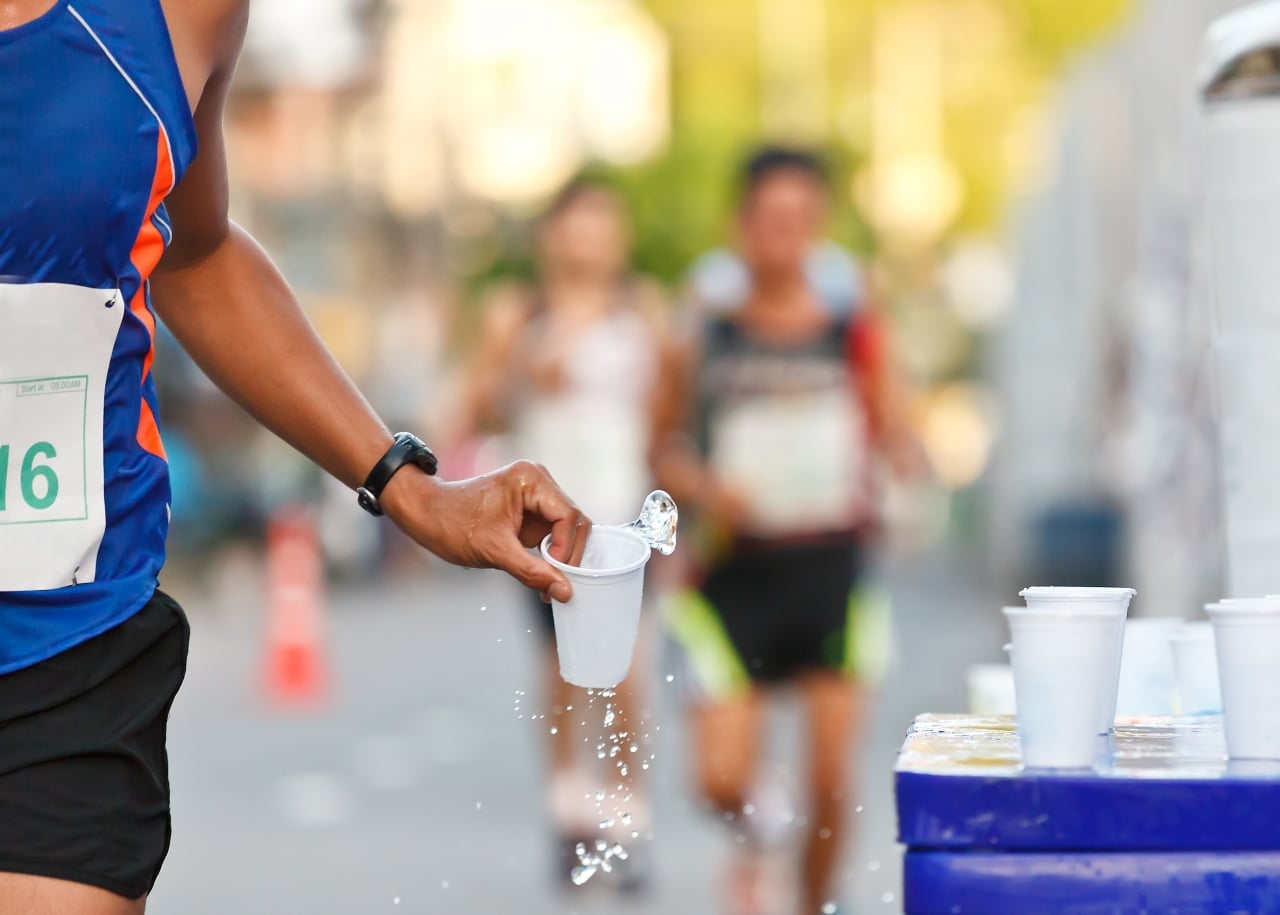
During a run, should you drink water or opt for an isotonic drink? The choice depends largely on the duration and intensity of the workout, the temperature, and your other planned nutritional intake. For a short run, water is usually sufficient. However, for longer runs, a drink that provides carbohydrates and electrolytes can help maintain proper hydration. Learn how to choose between water and an isotonic drink during a run.
Water primarily helps with hydration during exercise. However, it provides neither carbohydrates nor a significant amount of electrolytes.
An isotonic drink generally contains water, carbohydrates, and electrolytes. Its composition is designed to support hydration while providing a source of energy during exercise. It can therefore be beneficial when your needs go beyond simply drinking water.
To better understand how it works, check out our guide “Isotonic Drinks: What Are They For and When Should You Drink Them?”
For a race or a relatively short workout, water may be sufficient to meet hydration needs. When the effort lasts less than an hour and the intensity remains moderate, it is generally not necessary to systematically seek carbohydrate intake through a drink.
However, the need to drink depends on the conditions. Temperature, humidity, the intensity of the workout, and how much you sweat can affect fluid needs from one runner to another.
On a longer run, you can choose to drink water for hydration while consuming carbohydrates separately, for example, with energy gels or bars.
This strategy allows you to separate fluid intake from energy intake. It can be particularly useful if you have already established a specific nutritional strategy.
Check out our tips on energy gels: when to take them and how to choose them.
The longer the duration of exercise, the greater the need for energy and hydration. An isotonic beverage can therefore provide a combination of fluids, carbohydrates, and electrolytes in a single serving.
In particular, it can be useful during a marathon, a trail run, a long bike ride, or any other prolonged endurance activity.
Heat generally increases fluid loss through sweating. Under these conditions, hydration strategy deserves special attention.
A beverage containing electrolytes can help replenish them when you’re sweating heavily. However, the amount you drink should be tailored to your needs: drinking excessively is not a good strategy.
Check out our tips for running safely in hot weather.
One of the main practical benefits of an isotonic drink is that it provides carbohydrates while hydrating you. It can thus supplement or replace some of the intake provided by gels or bars, depending on your chosen strategy.
When it comes to long-term efforts, the goal is primarily to develop a coherent overall strategy rather than simply increasing the number of energy sources without taking into account the amounts consumed.

Water is usually sufficient for a short run, especially if you’ve eaten a normal meal before exercising. An isotonic drink isn’t always necessary.
However, in particularly hot conditions or during a very intense workout, your needs may be different.
As the run continues, carbohydrate intake becomes increasingly important. Water can still be used for hydration if carbohydrates are obtained from other foods or products.
An isotonic drink can be a practical solution for meeting both needs and spreading out nutrient intake throughout the workout.
During very long runs, you need to plan ahead for hydration and nutrition. Carbohydrates, fluids, and electrolytes can be obtained from a variety of sources: drinks, gels, bars, or other foods suitable for exercise.
The ideal strategy depends, among other things, on your digestive tolerance, your fitness level, the temperature, and how much you sweat.
Yes. Alternate between water and isotonic drinks can be a good strategy during a race, especially when hydration and carbohydrate needs are high.
For example, a runner might drink water at some aid stations and a carbohydrate-containing drink at others. The key is to know in advance the amounts of carbohydrates and fluids provided by each product in order to develop a coherent strategy.
Ideally, this strategy should be tested during training sessions and long runs, rather than for the first time on race day.
To help you decide, there are several factors to consider:
So there is no single answer that applies to all races. The goal is to find a strategy that’s suited to the race and to test it early enough in training.
For a short run, water is usually sufficient. For a long run, an isotonic drink can be beneficial for providing a combination of hydration, carbohydrates, and electrolytes. The choice depends largely on the duration, intensity, and weather conditions.
An isotonic drink provides water while generally supplying carbohydrates and electrolytes. It can therefore help with hydration during exercise, but its benefits depend on each runner’s individual needs and nutritional strategy.
It’s generally not necessary for a 10K run completed in under an hour. Water may be enough, especially if you’ve eaten the right foods before the race. However, your needs may vary depending on the duration, intensity, and conditions.
Yes. Taking an energy gel with water is a common strategy. In particular, it allows you to separate carbohydrate intake from hydration. You should test this strategy during training to ensure you tolerate it well.
No. An isotonic drink generally contains carbohydrates and electrolytes, but the term “electrolytes” more specifically refers to the minerals present in the drink. A drink containing electrolytes is therefore not necessarily isotonic.
To learn more, check out our tips on trail running nutrition: before, during, and after the race and nutrition for the 10K.
Need a drink to fuel your workout?
Check out our selection of isotonic drinks.








Or
Or
Your data is processed and collected by Lepape, which acts as the data controller, in accordance with the French Data Protection Act and the RGPD. For more information on the processing of your personal data, you can consult our Privacy policy.