New
CODE:

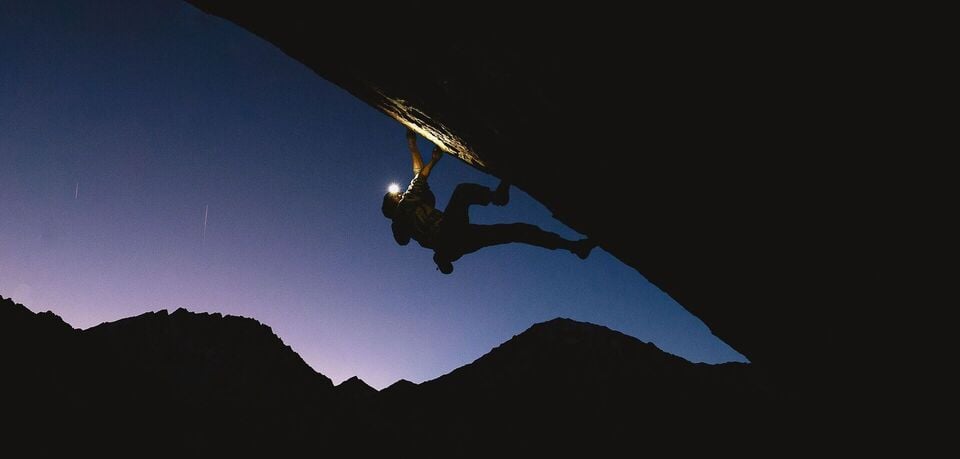
Whether basic or top-of-the-range, a headlamp improves visibility for safe travel, especially in the dark or on the road. It must also be comfortable to wear, with an adjustable headband and sometimes an extra strap for added stability. Ease of use is also crucial, with controls that are simple to master. This LEPAPE guide will help you choose the model best suited to your needs.
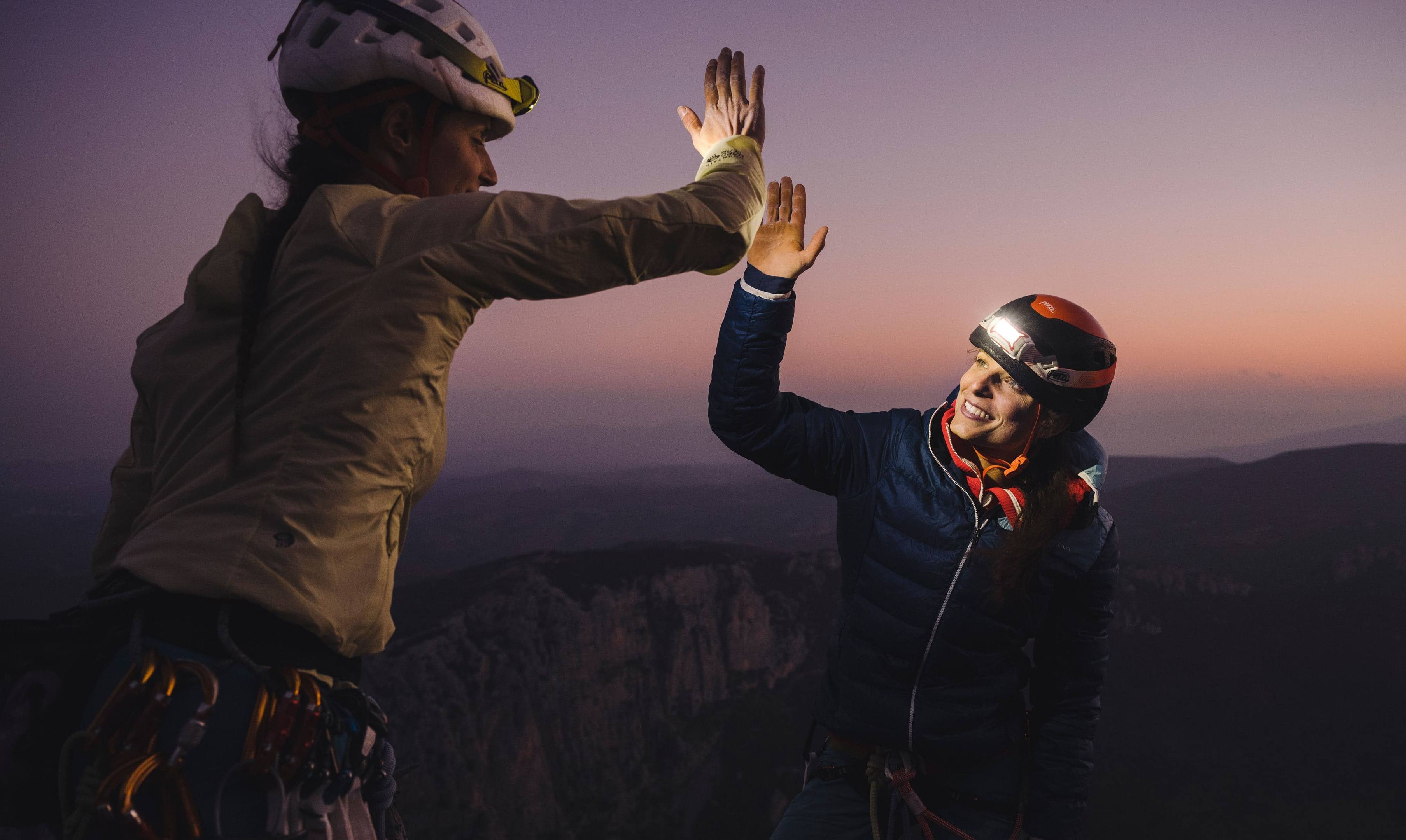
However, optical elements such as the rear reflector and front lens must also be taken into account, as these will concentrate the light into a wider or narrower“beam”, with a more or less pronounced central point.
Today, LED lighting is gaining in popularity for its durability, long life and energy efficiency. There are two types:
Unfocused LEDs: diffuse, short-range light.
Focused LEDs: powerful long-distance beam.
Versatile models combine these two types of lighting.
However, beware of the blue light emitted by LEDs, which can pose a risk to the eyes depending on intensity and distance:
Group 0: no risk
Group 1: low risk
Group 2: moderate risk
Group 3: high risk, even in the short term
Light intensity: a key criterion for choosing the right headlamp
The intensity of a headlamp, expressed in lumens, indicates its maximum power with new batteries or a full battery. This intensity decreases over time.
50 lumens: sufficient illumination up to 30 m in a narrow beam – ideal for flat roads.
100 lumens: good illumination up to 50 m – suitable for hiking on familiar trails.
200 lumens: effective range up to 100 m – perfect for forests or more technical paths.
350 lumens and over: powerful lighting beyond 100 m – recommended for ultra-trailers and long night outings, with optimized autonomy.
Lighting beams: wide or focused, a function for every purpose
Headlamps generally offer two types of beam:
Wide: illuminates a wide area at short range (≈10 m), useful for travel over unfamiliar terrain.
Focused: illuminates further away (30 to 100 m), ideal for spotting obstacles from a distance.
Today, many models combine these two beams for versatile use.
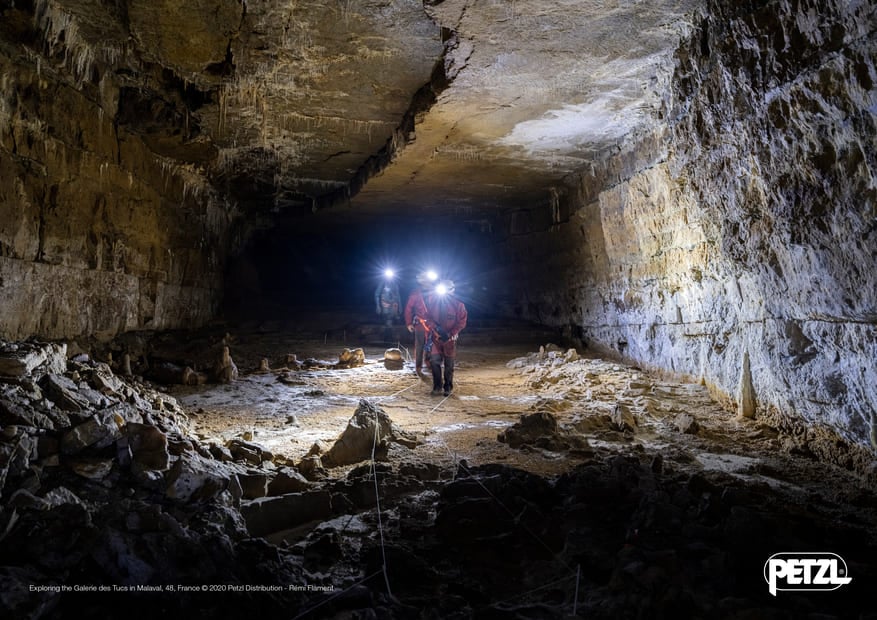
Power supply: a key factor in light intensity
The light output of a headlamp plays a crucial role in low-light conditions. It largely depends on the type of power supply:
Rechargeable (battery): practical, economical and often more powerful.
Battery-powered: easy to replace on the move, but less efficient over time.
Rechargeable headlamps: practical and sustainable
Models with rechargeable batteries, particularly lithium-ion, are ideal for prolonged activities (twilight running, night-time hiking).
Their easy recharging via USB, reliable autonomy and reduced environmental impact make them a wise and eco-responsible choice.
Battery-powered headlamps: long life and reliability
Battery-powered models often offer longer life, up to 200 hours– twice as long as some battery-powered models.
For outdoor use, we recommend lithium batteries, which are lighter, longer-lasting and more resistant to cold than alkaline batteries. Responsible recycling is essential to limit environmental impact.
Hybrid power supply and remote batteries: optimized power and autonomy
Some headlamps offer a hybrid power supply, combining rechargeable batteries and rechargeable cells, for extended autonomy and energy security in all circumstances.
Remote batteries, often placed at the back of the head or on the hips, enable better weight distribution, improving comfort during long activities. These configurations are ideal for users requiring long-lasting, reliable power.
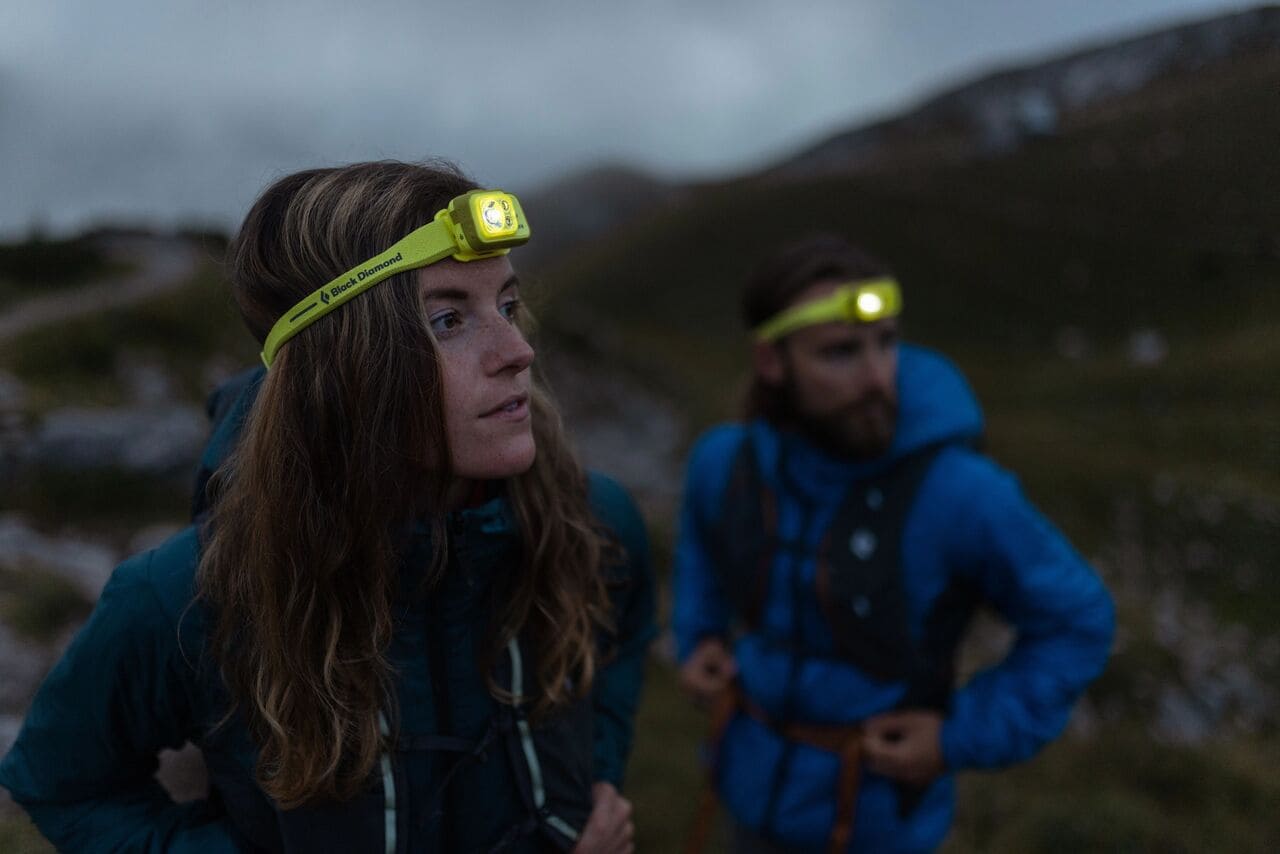
Autonomy management: brightness vs. lighting duration
With traditional headlamps, brightness gradually decreases as the battery is discharged. The higher the intensity, theshorter the autonomy.
As many models offer several lighting modes, it can be difficult to accurately assess the duration of use.
Two technologies enable better management:
Constant Lighting: stable brightness for a set period of time.
Reactive Lighting: automatic power adjustment to suit the environment.
Brightness and battery management: tradition vs. advanced technology
Classic headlamps see their light intensity decrease as the battery is drained, reaching their peak only with a full battery.
Top-of-the-range models incorporate regulation functions to maintain constant lighting up to a certain threshold, after which a rapid drop saves energy and provides minimal lighting to change batteries.
Constant Lighting mode guarantees stable brightness but considerably reducesautonomy (up to 4 times shorter than in classic mode).
Modern lighting modes: intelligent adaptation with Reactive Lighting
Today’s headlamps offer several lighting modes, including Reactive Lighting, which uses a sensor to automatically adjust light intensity according to the environment and the direction of gaze.
Thus, light is intensified when looking into the distance in the dark, and dimmed for nearby objects, optimizing both visibility and range.
Waterproofing and water resistance of headlamps
Water resistance, indicated by the IPX standard, is crucial depending on use.
Most lamps are rated between IPX4 (splashproof) and IPX6 (resistant to powerful jets of water).
The most robust models reach IPX7, guaranteeing immersion up to one meter for 30 minutes.
For outdoor activities, opt for a lamp with an index between IPX4 and IPX7 to ensure good protection against the elements.
Lighting modes and headlamp versatility
Most headlamps offer several modes that can be easily accessed via a single button.
The two main modes are :
Flood for wide illumination,
Spot (focused) for concentrated light.
This versatility adapts to a variety of needs.
Other common modes include :
Eco mode for extended autonomy,
Red light mode to reduce glare,
Flashing mode (front/rear) for 360° visibility.
Une lampe frontale puissante est essentielle pour éclairer suffisamment loin et anticiper les obstacles lors de la course à pied, en particulier sur des terrains rapides. Lors de vos sorties de course à pied, choisissez une lampe frontale de 150 à 200 lumens. Si vous préférez les sentiers hors route, optez pour une lampe frontale trail plus puissante, avec au moins 200 lumens. Assurez-vous d'utiliser un mode d'éclairage fort pour les environnements sombres et un mode clignotant pour améliorer votre visibilité. Si vous courez en groupe, privilégiez une lampe frontale avec une lumière rouge pour éviter d'éblouir les autres participants.
Découvrez nos modèles running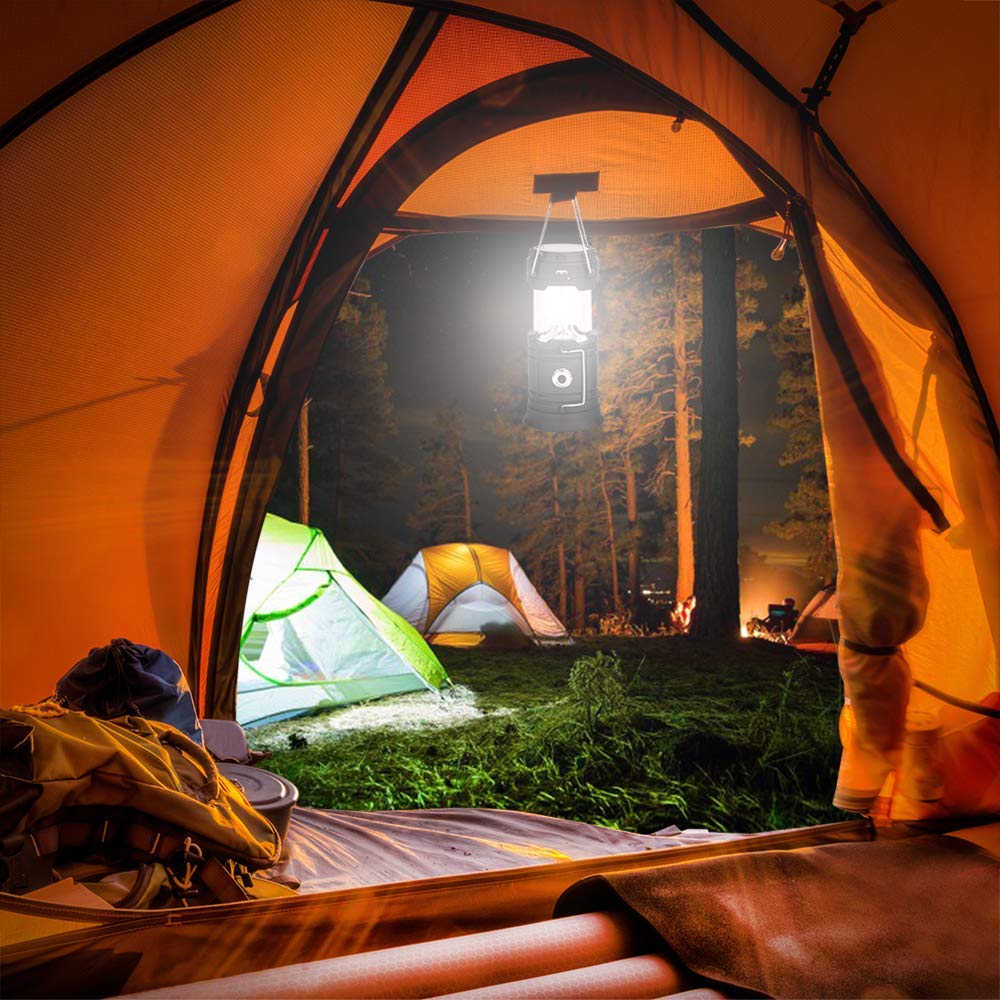
Pour vous évader en montagne en randonnée, une lampe frontale de 100 à 150 lumens est suffisante. Une bonne lampe frontale de randonnée doit, en effet, vous apporter un éclairage d’environ 50 mètres et une autonomie de plusieurs heures. Toutefois, si vous prévoyez de parcourir des terrains escarpés en pleine nuit, il peut être judicieux de choisir une lampe frontale plus puissante. Offrant de 160 à 290 lumens. Elle vous permettra d'éclairer jusqu'à environ 100 mètres devant vous et vous aidera à distinguer clairement tous les obstacles sur votre chemin.
La lanterne de camping est un accessoire inestimable pour toute aventure en plein air, en particulier lors du bivouac. Elle apporte la possibilité d'éclairer une zone entière sans avoir à pointer la lumière dans une direction spécifique. De plus, que vous choisissiez de la suspendre dans votre tente, de la poser sur une table de camping ou de l'accrocher à une branche d'arbre, elle offre une polyvalence d'éclairage qui rend votre expérience de camping beaucoup plus agréable.
Découvrez nos lanternesL'éclairage sur un vélo représente sans doute l'aspect le plus essentiel pour garantir une pratique sécuritaire du cyclisme. Que vous rouliez sur un vélo de route, un VTT, ou que vous soyez un cycliste urbain pressé. Son importance ne se limite pas à vous rendre visible, mais également à vous permettre de voir clairement la route, surtout à des vitesses plus élevées. Nous vous conseillons d'utiliser une intensité lumineuse entre 100 et 400 lumens lorsque vous évoluez dans un environnement bien éclairé. En revanche, dans un environnement non éclairé, nous vous recommandons d'opter pour un éclairage de 400 lumens.
Découvrez nos kits d'éclairages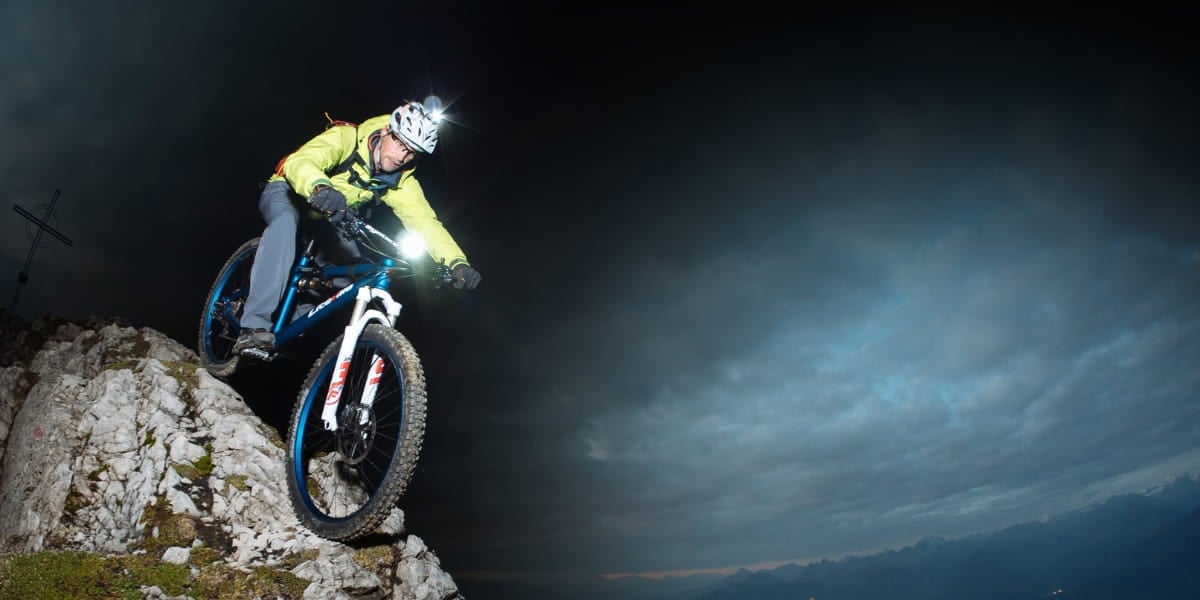
Lorsque l'on s'aventure dans des environnements exigeants et périlleux comme l'alpinisme, il est impératif d'avoir un éclairage de grande puissance spécialement conçu pour les conditions en haute montagne. Il est donc indispensable d'opter pour une intensité lumineuse comprise entre 300 et 900 lumens. De plus, il est essentiel de prendre en compte la légèreté de l'équipement. Les modèles polyvalents sont généralement conçus pour être légers, pesant entre 60 et 80 grammes, tandis que les modèles spécialisés peuvent varier de 175 à 300 grammes. Enfin, il est nécessaire de veiller à une certaine résistance au froid pour garantir que l'autonomie de l'éclairage ne soit pas considérablement réduite en cas de températures extérieures très basses.








Or
Or
Your data is processed and collected by Lepape, which acts as the data controller, in accordance with the French Data Protection Act and the RGPD. For more information on the processing of your personal data, you can consult our Privacy policy.