



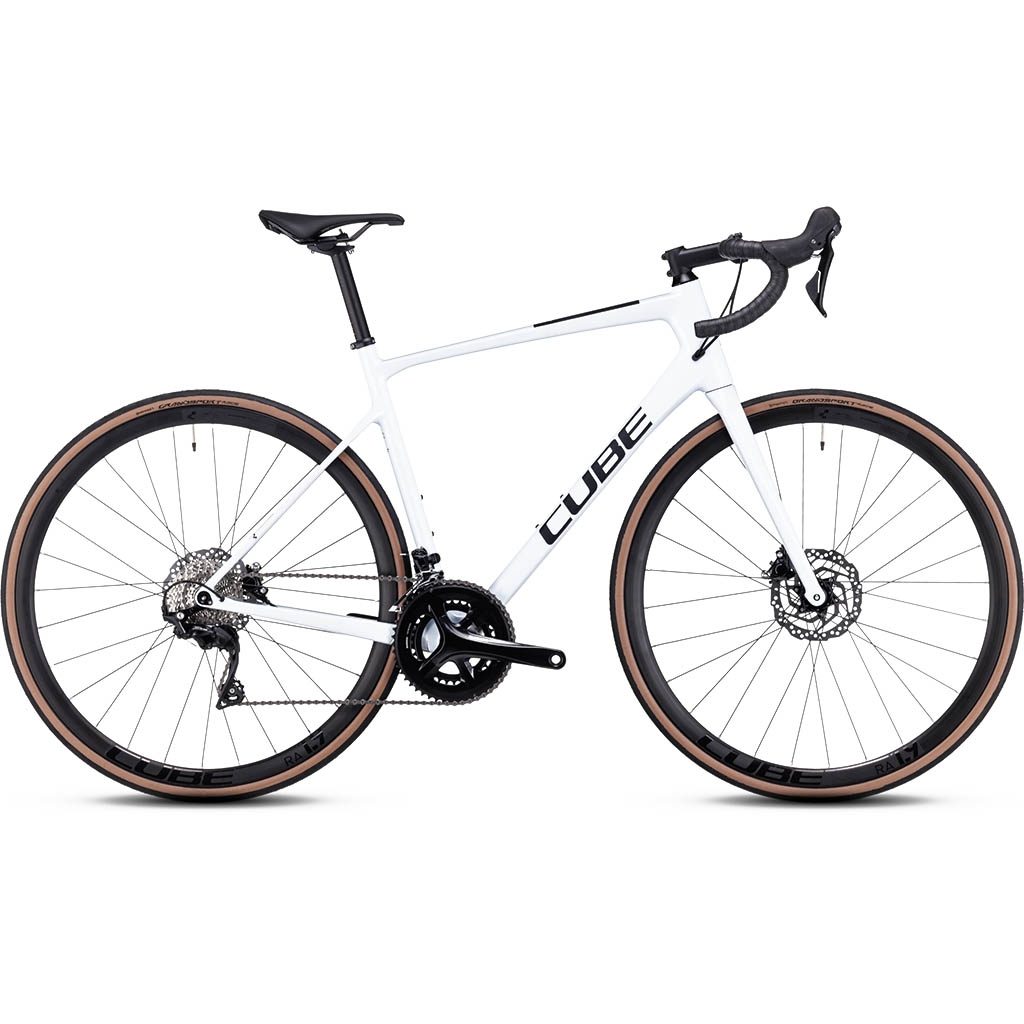

Comment choisir la taille de son vélo électrique ?
Avant de craquer pour le vélo de ses rêves, il est nécessaire de calculer avec précision 2 critères physiques fondamentaux : la taille et la hauteur de l’entrejambe.


The size of a bike should be proportional to the rider’s height. Whether it’s a child’s bike, a woman’s bike or a man’s bike, each machine must be carefully designed to suit its owner. To guide you through this sometimes complex choice, here’s a focus on the essential points to consider before buying.

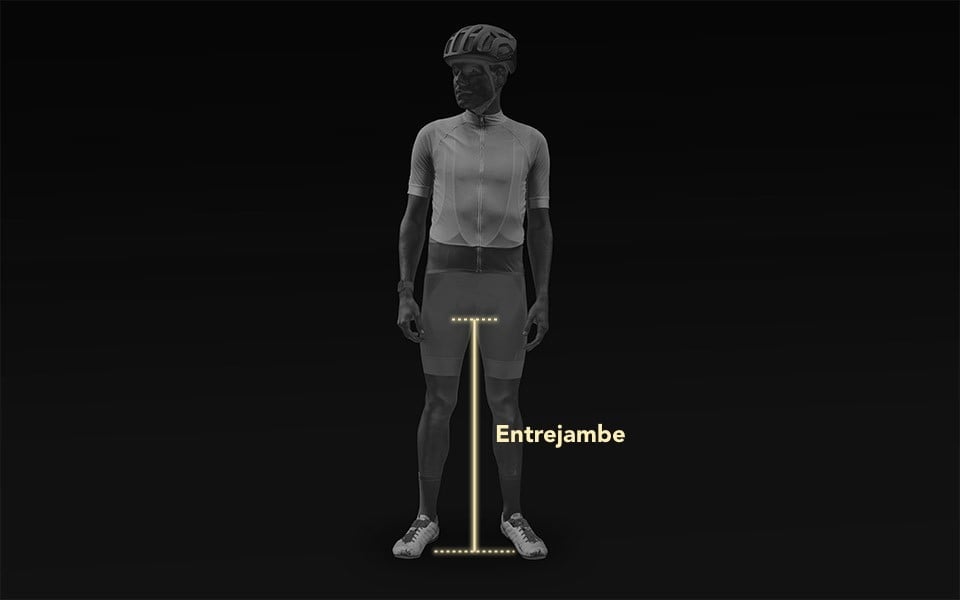
Before buying the bike of your dreams, you need to calculate 2 fundamental physical criteria: height and inseam height. While everyone is generally familiar with the first parameter, the same cannot be said for the second (foot/perineum distance), which is of prime importance.
To calculate it, lean barefoot against a wall and mark the highest point of the adductor muscle with a hard book. Then calculate the distance from ground to point and you’ll obtain the precious value in cm that will dictate all your cycle purchases.

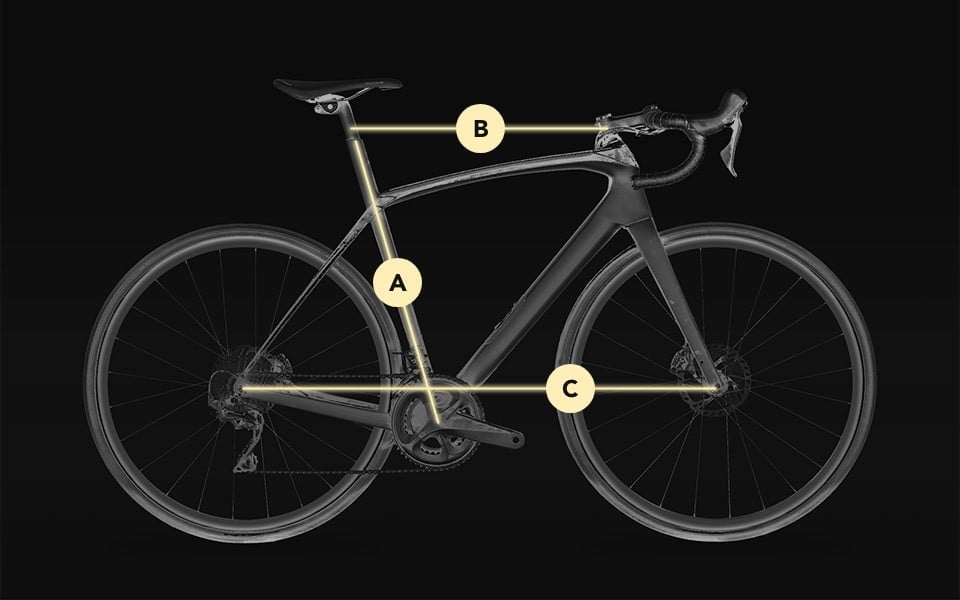
The size of a racing bike is determined by two key elements: the length of the top tube and the length of the seat tube (bottom bracket axle – top tube). These two dimensions expressed in cm (A and B) validate the frame size of a bicycle.
In addition to these 2 essential parameters, other important information is communicated via frame geometry: head tube angle (C), wheelbase (D) or bushing length (E) are all variable elements that require particular attention when choosing a size.
Je découvre les vélos de routeFor example: a size 60 (XL) bike logically benefits from proportional measurements generating a longer wheelbase and steering angle than a 54 or 56 frame. It’s by taking these factors into account and combining them with your physical characteristics (inseam height – height) that you can accurately determine the frame size best suited to your build.
Longueur de l’entrejambe en cm X 0,66 = Taille recommandée du cadre de vélo route
Hauteur d’entrejambe x 0,885 (axe pédalier – creux de selle) = Hauteur de selle efficiente par rapport à l’axe de pédalier
(for information only, please refer to the manufacturer’s size guide)
| Your size | Road bike sizes |
|---|---|
| 152 to 160 cm | 47 cm – XS |
| 158 to 165 cm | 50 cm – XS/S |
| 163 to 170 cm | 52 cm – S |
| 168 to 175 cm | 54 cm – M |
| 173 to 180 cm | 56 cm – M/L |
| 180 to 188 cm | 58 cm – L |
| 184 to 192 cm | 60 cm – XL |
| 190 to 200 cm | 190 to 200 cm – XXL |

Beyond the frame, a suitable road bike is one with the right-sized components. That’s why the handlebars and stem are the first elements to consider after the frame.
The length of the stem depends mainly on the length of the torso and arms, but also on the desired position on the machine.
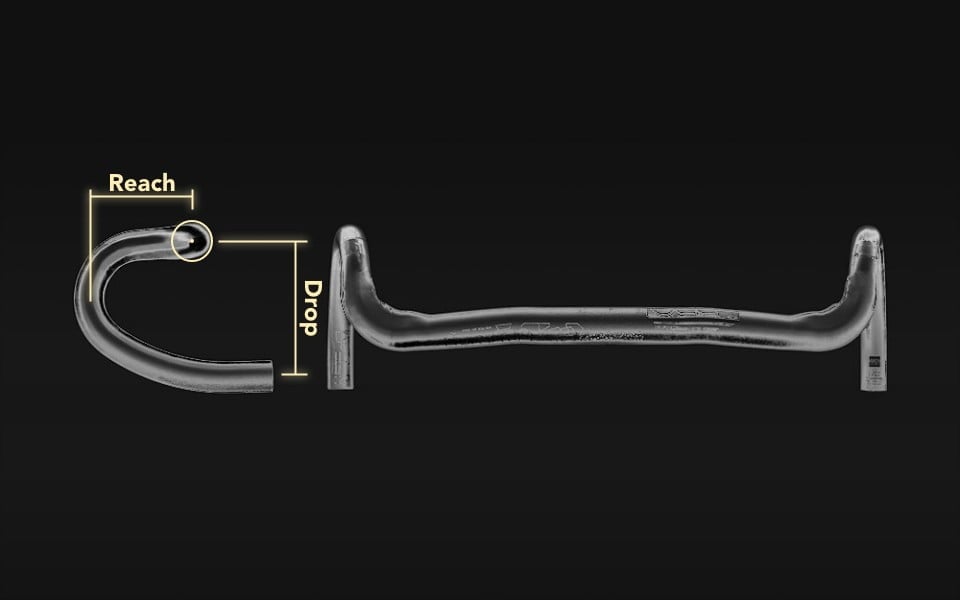
Handlebar width correlates with the rider’s shoulders: the taller the rider, the wider the handlebar needs to be (calculated axis-to-axis dimension). The shape of the part (Reach and Drop) will also have a slight impact on position.
You may find yourself between two frame sizes. A slightly smaller frame gives you more sportiness and responsiveness, while a larger frame guarantees greater stability and easier clearance. In case of doubt, we advise you to choose the second option to maintain the bike’s desired properties. You can then adjust the components if they are not in the optimum position.
In any case, save precious time by carrying out a postural study! By accurately determining the dimensions of the perfect bike for your body size (frame size, stem length, crank length, handlebar width, etc.), this in-store measurement will help you avoid errors and approximations when choosing the right bike size!
Je découvre les vélos de route
Carbon road bike designed for cyclists looking for lightness, aerodynamics and performance.
Vélos TREK

Practical, comfortable and responsive, ideal for year-round training.
Vélos CUBE
Avant de craquer pour le vélo de ses rêves, il est nécessaire de calculer avec précision 2 critères physiques fondamentaux : la taille et la hauteur de l’entrejambe.

Le choix de la taille d’un vélo enfant doit être proportionnelle au gabarit du pilote. Pour vous guider dans ce choix parfois complexe, focus sur les points essentiels à considérer avant achat.

La taille d’un vélo de course est déterminé via deux éléments clés : la longueur du tube horizontal et celle du tube de selle (axe de pédalier – sommet du tube). Ces deux dimensions exprimées en cm valident la taille de cadre d’un vélo.
Or
Or
Your data is processed and collected by Lepape, which acts as the data controller, in accordance with the French Data Protection Act and the RGPD. For more information on the processing of your personal data, you can consult our Privacy policy.