Your data is processed and collected by Lepape, which acts as the data controller, in accordance with the French Data Protection Act and the RGPD. For more information on the processing of your personal data, you can consult our
Privacy policy.
Forgot Password
Outdoor | Guide to green technologies and eco-labels
For a long time, outdoor wear was made from petroleum-derived fabrics. But in recent years, the outdoor industry has set an example and begun its transition to a greener future. The EuropeanOutdoorGroup(EOG) brings together around a hundred brands, and the ecological labels are numerous. Lepape, which offers committed brands, offers a guide to textiles and eco-labels for outdoor clothing, to help you make the right choice.
Guide to sustainable fibers and textiles
Sustainability in the textile industry is largely based on the choice of raw materials. The use of recyclednatural and syntheticfibers is essential to reduce our carbon footprint and limit the use of non-renewable resources.
Natural fibers
Natural fibers, such as organic cotton and linen, are appreciated for their low environmental impact. They require fewer chemical processes and are often grown with natural rather than artificial fertilizers.
Organic cotton: Grown without pesticides or artificial fertilizers, this cotton uses much less water than traditional cotton.
Wool: many brands offer outdoor clothing in merino wool, combined or not with synthetic materials, such as Icebreaker, Patagonia, etc.
Down: If you opt for this material, choose brands committed to 100% traceable down (see RDS label below).
Bamboo, hemp, coconut, coffee grounds, castor oil : not very common, but some brands like Patagonia and Uyn use these innovations.
Wood pulp: Tencell, from eucalyptus forests, is environmentally friendly. The brand Icebreakerbrand uses it in the design of its garments.
Recycled synthetic fibers
In addition to natural fibers, recycled synthetic fibers such as recycled polyester also make a significant contribution to sustainability. They use less energy and virgin resources than their non-recycled counterparts.
Recycled polyester: Made from recycled plastic bottles, its production generates 59% less energy than virgin polyester.
Recycled nylon: Allows post-consumer waste to be reused, thus helping to reduce plastic debris.
Examples of brands distributed by Lepape: Patagonia, The North Face, Mammut, Vaude, Salewa
Eco-labels serve as essential benchmarks for consumers wishing to make responsible choices. These labels assess different aspects of product sustainability, from the sourcing of raw materials to working conditions in factories.
Key eco-labels
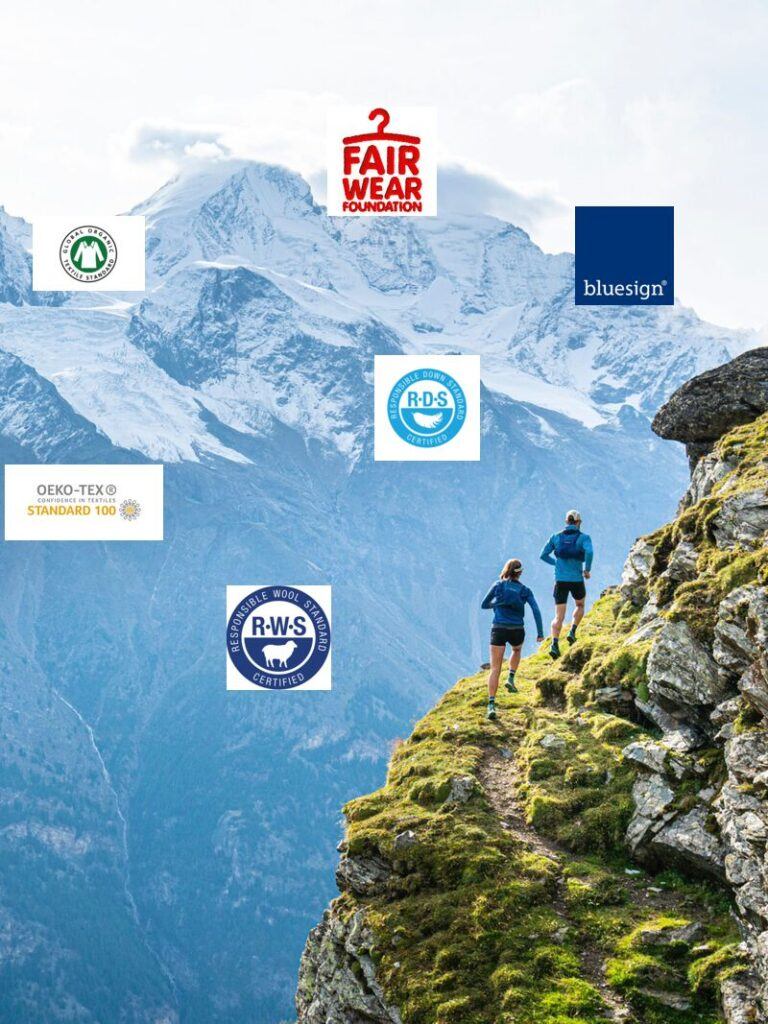
Bluesign®: the Bluesign®label guarantees sustainable textile production by banning toxic chemicals, optimizing the use of water and energy, and reducing waste. It also includes social criteria such as the prohibition of forced and child labor, and freedom of association.
GOTS: the GOTS (Global Organic Textile Standard) label certifies that natural fibers come from organic farming and bans certain chemical compounds. It also complies with International Labour Organization standards.
Oeko-Tex 100: this label guarantees the absence of harmful substances in textiles, certifying raw, semi-finished and finished products, including fabrics and accessories.
RDS: the Responsible Down Standard (RDS) certifies and traces down and feathers, ensuring that force-feeding and the use of live animals are prohibited, and that animal welfare is respected.
RWS: Responsible Wool Standard certifies that the wool comes from farms managed in an environmentally and animal-friendly manner.
Fair Wear Foundation: ensures good working conditions in the textile industry, with social criteria such as decent wages and freedom of association.
Many of the brands offered by Lepape are committed to an eco-responsible approach: Dynafit, Odlo, Vaude, Salewa, Patagonia, Haglöfs, Mammut, Vaude, Millet, Orthovox, The North Face, Icebreaker and others.
Responsible purchasing and ecological choices
Buying responsibly and choosing ecologically goes beyond simply selecting certified products. They also involve raising awareness. Lepape advises you on how to adopt a responsible purchasing approach:
Read labels and look for recognized certifications.
Choose brands that are transparent about their supply chain.
Don’t hesitate to ask the sales staff for advice if you buy in one of our boutiques!










Or
Or
Your data is processed and collected by Lepape, which acts as the data controller, in accordance with the French Data Protection Act and the RGPD. For more information on the processing of your personal data, you can consult our Privacy policy.