New
CODE:

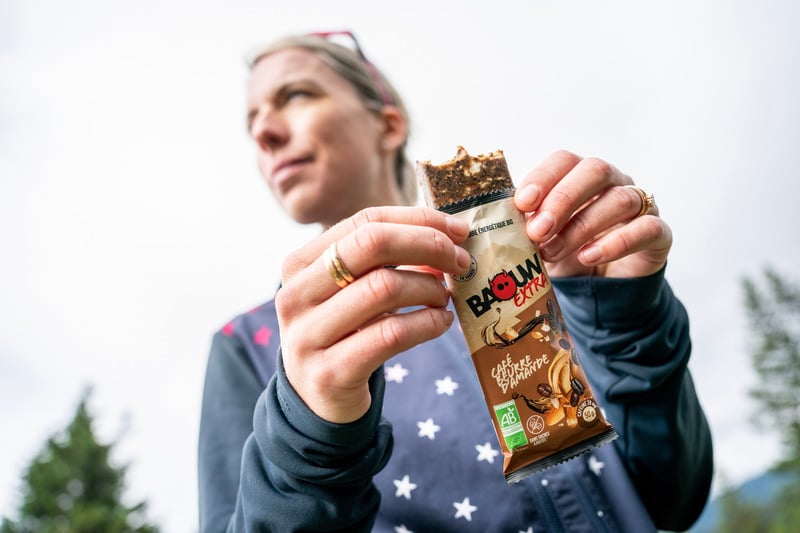
Energy bars provide carbohydrates during endurance exercise and help replenish energy stores as the duration of the activity increases. Whether you’re running, trail running, cycling, or running a marathon: find out when to eat an energy bar, how to choose one, and how it differs from an energy gel or a protein bar.
An energy bar is primarily designed to provide carbohydrates during exercise. It can be used before or during physical activity, especially when it lasts for several hours.
Its solid form can also be useful for varying textures and energy sources during a long outing. It can thus be incorporated into a nutrition strategy tailored to the duration and intensity of the activity, as well as to each person’s habits.
To learn more about nutrition for endurance activities, check out our guide, “Trail Running Nutrition: Before, During, and After the Race.”
An energy bar can be eaten before a workout or competition when you need a source of carbohydrates. In particular, it can supplement a meal eaten several hours before the start or serve as a snack closer to the time of exercise.
The choice depends, in particular, on how much time is left before the race and each person’s digestive tolerance. Before a race, it’s best to stick with a product you’ve already tested during training.
For a short race like a 10K, your nutritional needs are different from those of an event lasting several hours. Check out our tips in our guide Nutrition and the 10K: What to Eat Before, During, and After?.
Energy bars are particularly well-suited to prolonged efforts during running . They provide carbohydrates throughout the activity and can be consumed in addition to hydration.
Whether you’re trail running, running a marathon, cycling, or on a long ride, they can be incorporated into a nutrition strategy that combines multiple energy sources. To compare their use with that of energy gels, see our guide “Energy Gels: When to Take Them and How to Choose Them.”
The longer the workout, the more beneficial it can be to vary your energy sources. An energy bar can then complement the gels, energy drinks, or other foods consumed during the activity.
The key is to find a strategy that’s suited to the duration of the effort and that you’ve had a chance to test during training.
When using a bar during exercise, focus first on the amount of carbohydrates it provides. This allows you to compare different products and estimate their contribution to your energy strategy.
An energy bar should be suited to your digestive tolerance. The amount of fiber, fat, or certain ingredients can affect digestion during exercise.
As with gels, it is recommended that you try energy bars during training before using them in a race.
Soft texture, more compact bar or easy-to-split format: the choice also depends on your preferences and the conditions of use.
Whether you’re trail running or on a long bike ride, a package that’s easy to open and consume can be especially convenient. If you need to carry multiple items during your run, check out our tips on choosing a hydration vest or backpack.

Energy bars and energy gels share a common goal: to provide energy, primarily in the form of carbohydrates. Their main differences lie in their format, texture, and method of consumption.
Gel is generally easier to consume when you want a quick energy boost without having to chew. Bars, on the other hand, have a solid texture and can be a good option for varying your energy intake during prolonged exercise.
The choice therefore depends on your preferences, the duration of your workout, and your digestive tolerance. For more information, check out our guide , “Energy Gels: When to Take Them and How to Choose Them.”
An energy bar is primarily designed to provide carbohydrates and energy to fuel physical activity. A protein bar focuses more on protein intake, particularly as a snack or after training.
These two products therefore do not serve exactly the same purpose. To find out when to eat them and how to choose them, see our guide, “Protein Bars: How to Choose Them and When to Eat Them.”
Energy intake and hydration are complementary during prolonged exertion. When you consume an energy bar during a race, remember to also drink regularly according to your needs, the duration of the effort, and the weather conditions.
In hot weather, your needs may change. Check out our tips Running in Hot Weather.
You can eat an energy bar during prolonged exercise, depending on the race’s duration and your carbohydrate intake strategy. Always test the product during training before a race.
Yes. It can be used as a source of carbohydrates before exercise, especially when your last meal was some time before the start of your run. Your choice should take into account how long before the run you’ll be eating it and how well your stomach handles it.
An energy bar is primarily designed to provide carbohydrates and energy, while a protein bar provides more protein and serves a different nutritional purpose.
Both can provide carbohydrates during exercise. Gels are generally easier to consume quickly, while bars offer a variety of textures and energy sources.
Yes. Energy bars can be incorporated into a trail runner’s nutrition strategy, especially during long runs and races. Their usefulness depends on the duration of the run and the runner’s preferences.
For your workouts and competitions, check out our selection of energy bars designed for physical activity.








Or
Or
Your data is processed and collected by Lepape, which acts as the data controller, in accordance with the French Data Protection Act and the RGPD. For more information on the processing of your personal data, you can consult our Privacy policy.